De’Longhi La Specialista Arte Evo vs Breville Barista Express: Which Should You Buy?
Short on time?
Buy the De’Longhi La Specialista Arte Evo if you want iced drinks from the same machine, a narrower footprint and fewer decisions: it has a cold brew preset that finishes in under 5 minutes, 3 simple temperature settings and a tamping guide and mat in the box. Buy the Breville Barista Express if hot espresso is the priority and you want more room to fine-tune: it has 16 grind settings against 8, a larger 54 mm portafilter, PID temperature control and a bigger 67 oz water tank. Both are mid-range machines with a built-in conical burr grinder, a pressure gauge and a manual steam wand.
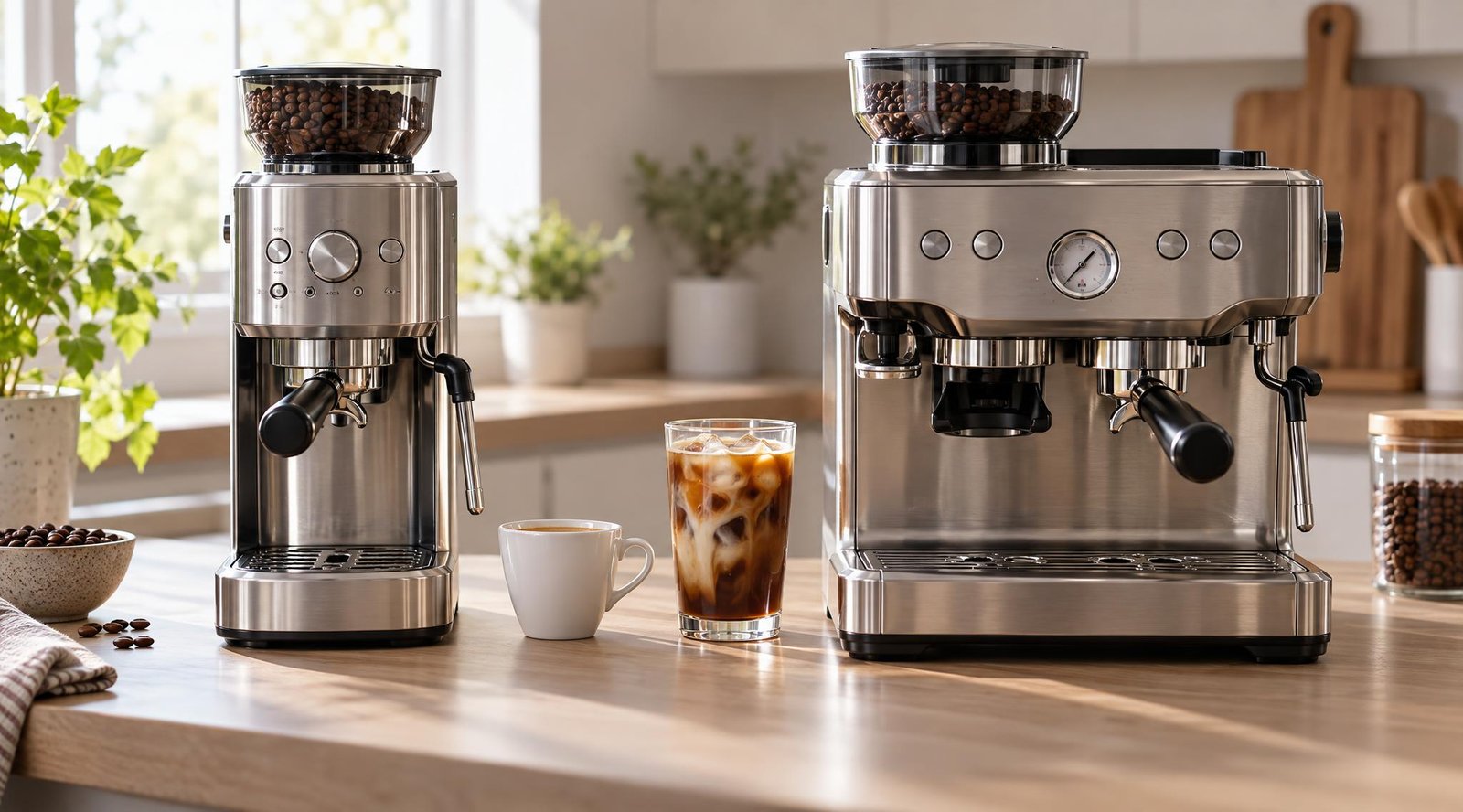
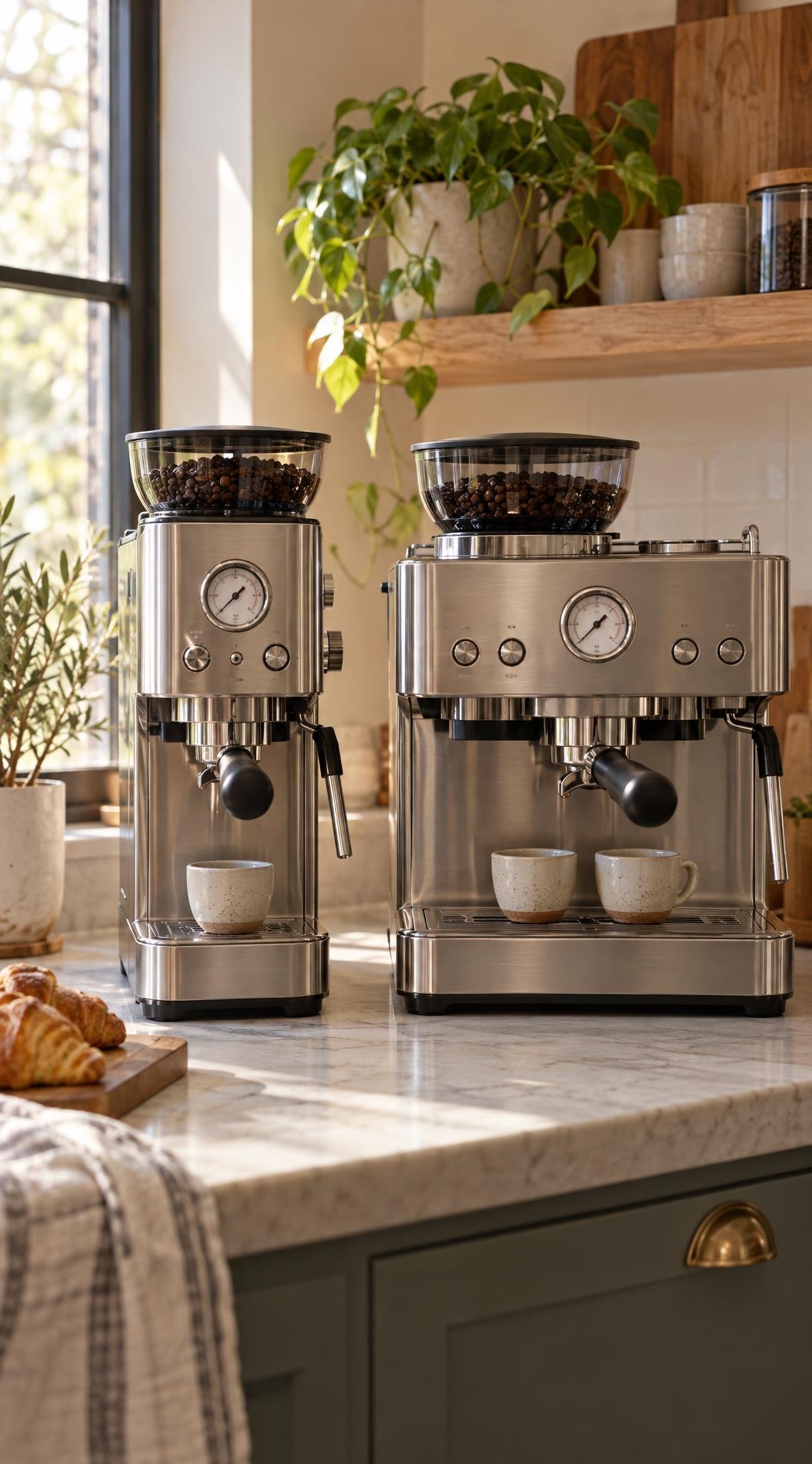
In the De’Longhi La Specialista Arte Evo vs Breville Barista Express matchup, the Arte Evo is the more versatile and compact machine, and the Barista Express is the more adjustable one. The Arte Evo adds a cold brew function and a slimmer body, while the Barista Express gives you twice as many grind settings and a larger portafilter for dialing in hot espresso.
This comparison is based on manufacturer specifications, published features and common owner feedback, not on hands-on testing. Both machines sit in the mid-range tier and their prices move often, so check the current price on Amazon before you decide.
De’Longhi La Specialista Arte Evo vs Breville Barista Express: Specs Side by Side
| Feature | De’Longhi La Specialista Arte Evo (EC9255M) | Breville Barista Express (BES870XL) |
|---|---|---|
| Built-in grinder | Conical burr, 8 grind settings | Conical burr, 16 grind settings |
| Portafilter | 51 mm | 54 mm |
| Tamping | Separate tamper with a dosing and tamping guide and a tamping mat | Removable magnetic tamper that stores in the machine, plus Razor dose trimming tool |
| Heating system | Thermoblock | Thermocoil with PID temperature control |
| Brew temperature control | 3 preset temperature settings (Active Temperature Control) | PID set to 200°F, adjustable in 2°F steps |
| Pump | 15 bar Italian pump | 15 bar Italian pump, low-pressure pre-infusion |
| Pressure gauge | Yes | Yes |
| Drink presets | Espresso, Americano, Cold Brew, plus hot water | 1 cup and 2 cup espresso, plus hot water |
| Cold brew | Yes, Cold Extraction Technology, under 5 minutes | No |
| Steam wand | Manual My LatteArt wand | Manual wand, single-hole tip |
| Water tank | 56 oz (1.7 L), removable | 67 oz, removable |
| Listed size (H x W x D) | 15.87 x 11.22 x 14.37 in | 15.8 x 12.5 x 13.2 in |
| Listed weight | 21.5 lb | 23 lb |
| Price tier | Mid-range | Mid-range |
Size figures come from retailer listings, and different sellers measure with or without the hopper and portafilter. Treat them as a guide and measure the space under your cabinets before you order either one.
What Do the Two Machines Have in Common?
Quite a lot. Both are semi-automatic espresso machines with a single heating system, so neither can brew and steam at the same moment. Both grind fresh beans with a built-in conical burr grinder, push water through the coffee with a 15 bar Italian pump, show extraction pressure on a front gauge and steam milk with a manual wand that you control yourself.
Grinder and Grind Settings: 8 vs 16
The Barista Express has the clear edge here. Its conical burr grinder has 16 grind settings, while De’Longhi lists 8 for the Arte Evo sold in the United States. Each step on the Breville is a smaller change, which makes it easier to land a shot in the usual 25 to 30 second window.
Neither grinder is stepless, and owners of both machines commonly report that the ideal grind sometimes falls between two steps. On the Arte Evo that gap is wider, so you lean more on the dose dial to make up the difference. On the Express you adjust the grind amount dial for the same reason.
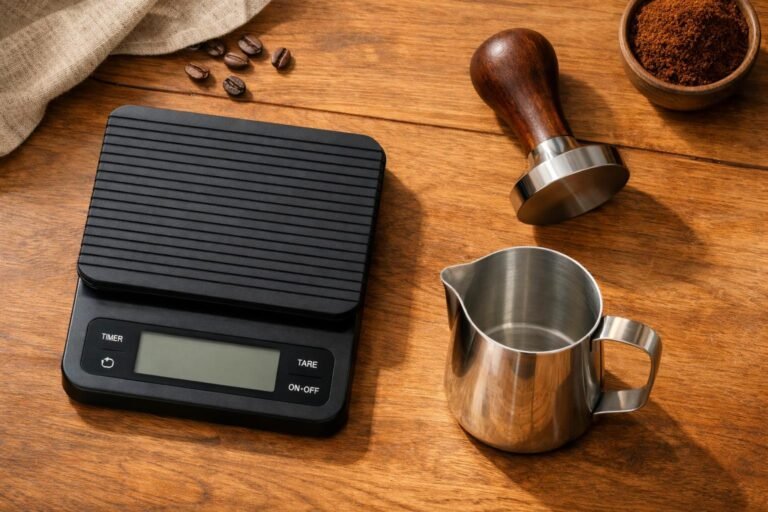
If you are new to this, our guide on how to dial in espresso covers the grind, dose and timing basics that apply to both machines. A small espresso scale with a timer is the single most useful add-on for either one.
Tamping: Guided Kit or Built-In Tamper?
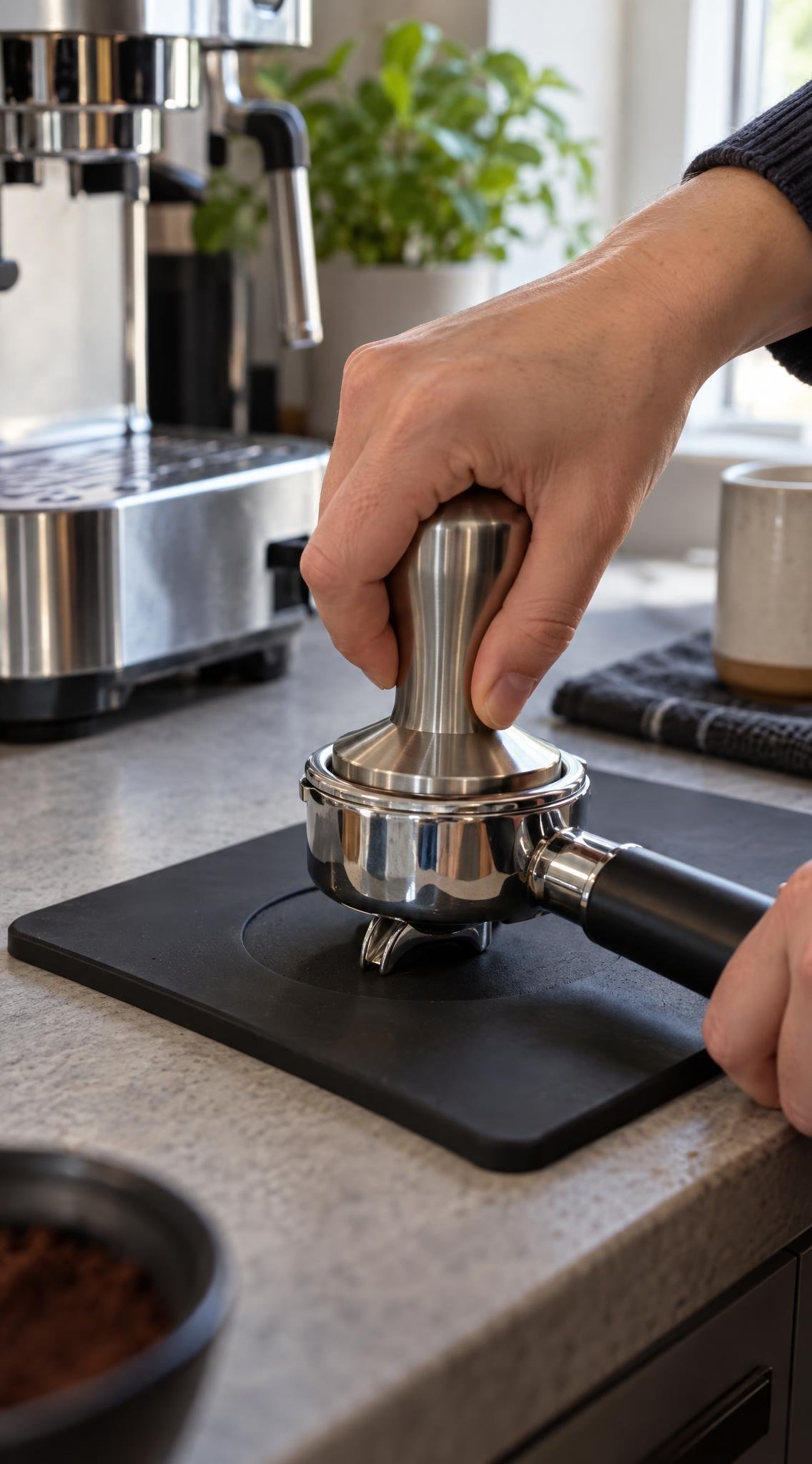
Both machines use manual tamping. Neither has the lever-assisted tamping found on pricier models in each brand’s range.
The Arte Evo comes with what De’Longhi calls a barista toolkit: a metal tamper, a dosing and tamping guide that sits on top of the portafilter, and a tamping mat. The guide acts as a funnel while you grind, keeps grounds from spilling and helps you tamp level.
The Barista Express takes a different route. Its tamper is held on the machine by a magnet, so you can pull it off and tamp on the counter or push the portafilter up against it in place. Breville also includes the Razor dose trimming tool, which scrapes the puck down to a set height if you have overdosed. The current Breville listing also includes a dosing funnel attachment.
Heating and Temperature Control
The Arte Evo heats with a thermoblock and the Barista Express with a Thermocoil. Both are compact, quick-heating systems compared with a traditional boiler.
Temperature control is where they differ. The Arte Evo uses Active Temperature Control with 3 preset brew temperatures. De’Longhi’s guide matches the lower setting to light roasts and the higher setting to dark roasts, which is easy to follow but gives you only three choices.
The Barista Express uses PID temperature control to hold brew water at 200°F, and you can shift that target up or down in 2°F steps. That is finer control than three presets.
Does the Arte Evo Really Make Cold Brew?
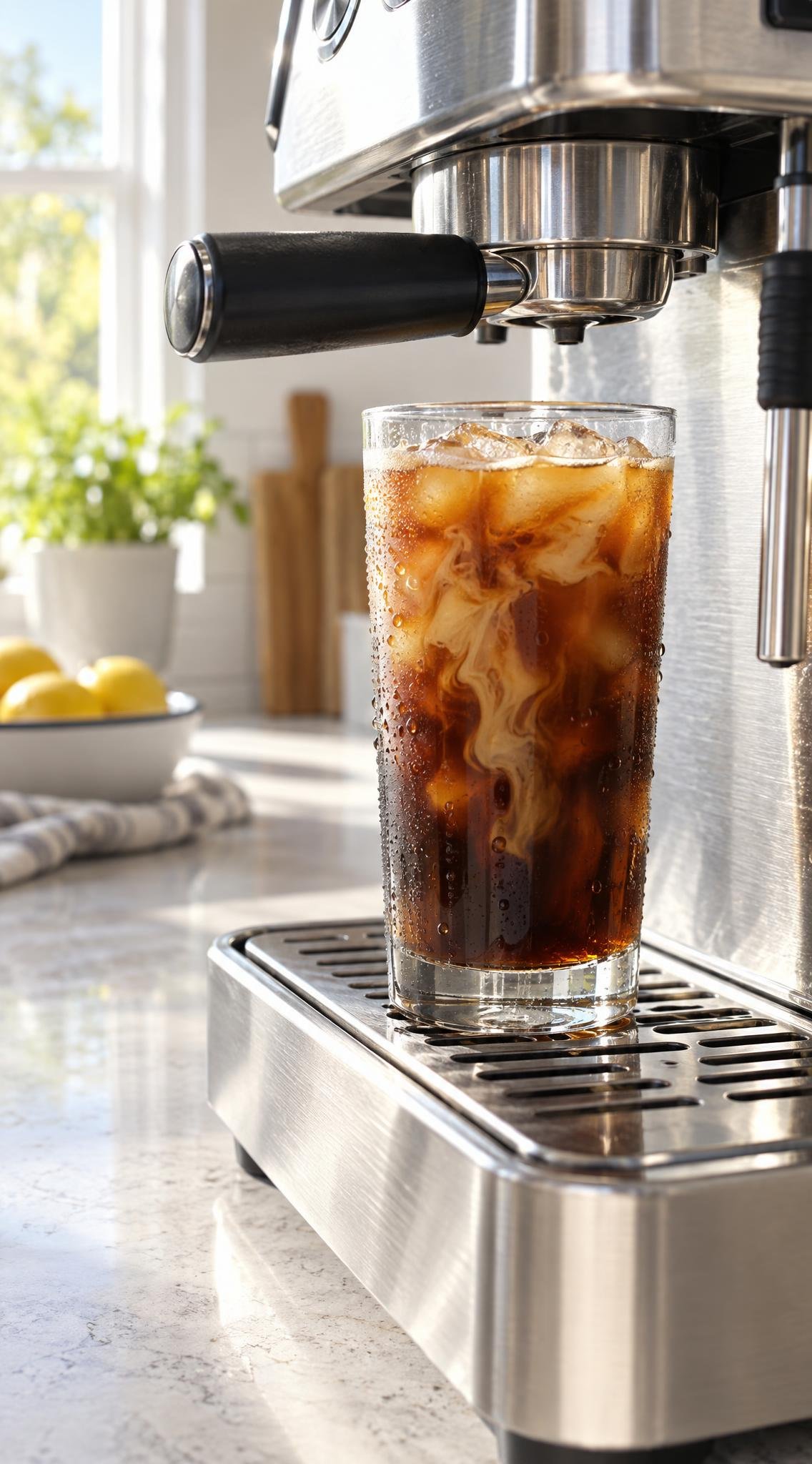
It has a dedicated Cold Brew preset, and the Barista Express does not. De’Longhi’s Cold Extraction Technology pushes room temperature water through the ground coffee slowly and at very low pressure, and the company says a serving is ready in under 5 minutes. You grind and tamp as usual, select Cold Brew on the dial and press OK. De’Longhi recommends a coarser grind setting for it.
Be realistic about the result. This is a fast cold extraction, not the 12 to 18 hour steep that traditional cold brew uses, and published reviews are mixed. Some owners enjoy it over ice with milk, while at least one detailed review found it thin and somewhat bitter with standard roasts. It is a nice extra for iced drink fans, but it should not be the only reason you choose the machine.
Steam Wand: Which Is Better for Lattes?
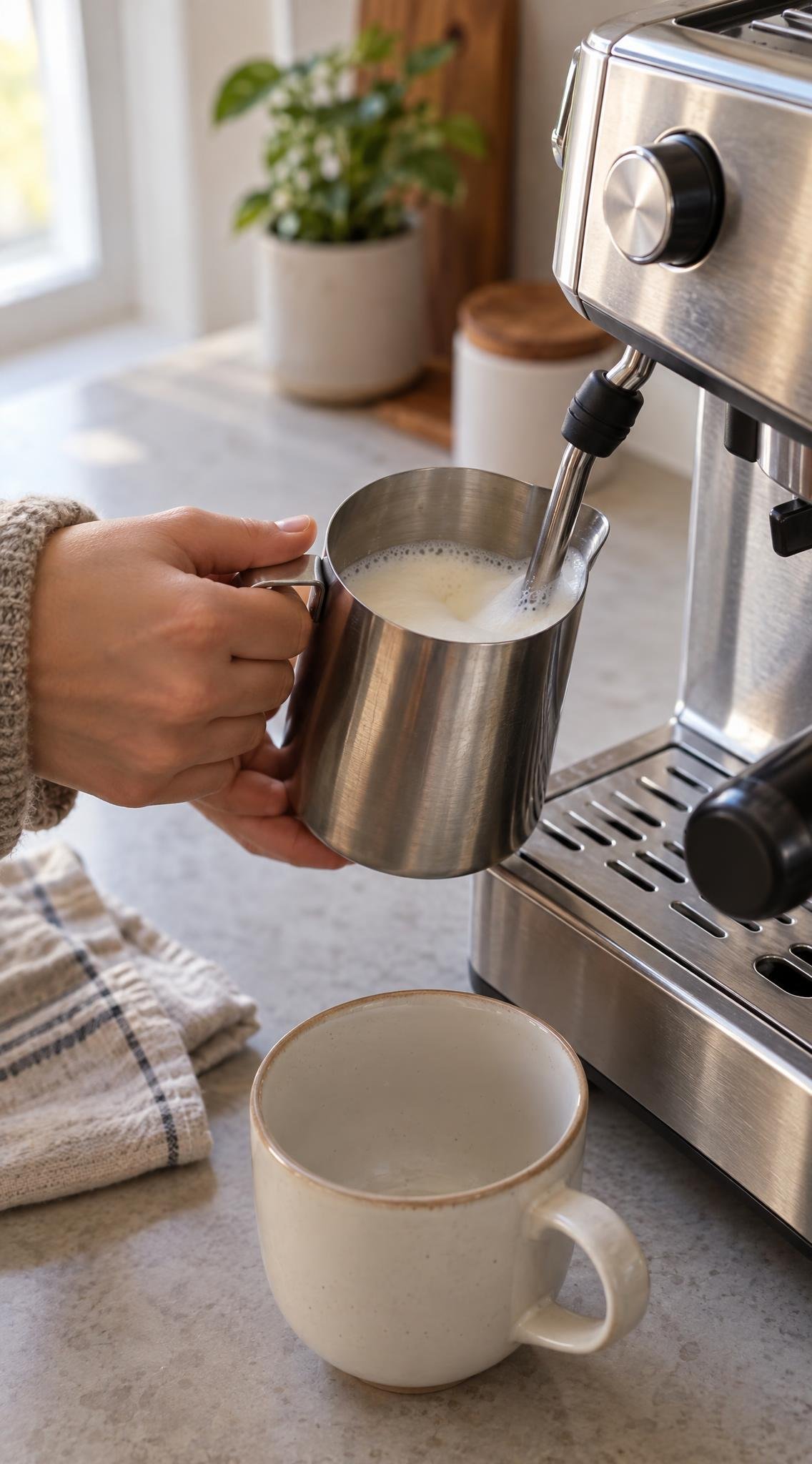
It is close. Both have a manual stainless steel steam wand, so you learn to stretch and swirl the milk yourself on either machine. De’Longhi calls its wand My LatteArt and describes it as commercial-style and quick to heat. The Barista Express has a swivel wand with a single-hole tip.
A common piece of owner feedback on the Barista Express is that the single-hole tip steams slowly, often well over a minute for one latte. Neither machine textures milk automatically.
A 12 oz milk frothing pitcher suits single lattes on both machines. A pitcher with a sharp spout helps with latte art.
Portafilter Size: 51 mm vs 54 mm
The Arte Evo uses a 51 mm portafilter and the Barista Express a 54 mm one. Neither is the 58 mm size used on most commercial machines.
The size matters mostly for accessories. The 54 mm Breville size has a very wide range of aftermarket tampers, bottomless portafilters, puck screens and distribution tools. The 51 mm size is also used across De’Longhi’s range, so parts exist, but the selection is smaller. Always check the listed fit before you buy an accessory for either machine.
Footprint and Counter Space
The Arte Evo is the narrower machine. Retail listings put it at about 11.2 inches wide, against about 12.5 inches for the Barista Express. Both stand close to 16 inches tall, and the Arte Evo is listed slightly deeper at about 14.4 inches against roughly 13.2 inches.
The Breville carries more water, with a 67 oz tank against the De’Longhi’s 56 oz, so you refill it a little less often. Both tanks are removable. Weight is similar, at about 21.5 lb for the Arte Evo and 23 lb for the Barista Express.
Learning Curve: Which Is Easier for a Beginner?
The Arte Evo is a little easier to get started on, and the Barista Express gives you more to grow into.
On the De’Longhi, you pick a drink on the dial (Espresso, Americano or Cold Brew), choose one of 3 temperatures and follow the roast-based suggestions in the quick guide for grind and dose.
On the Breville, there are no drink presets beyond 1 cup and 2 cup, and you set the grind size and grind amount by trial and error.
De’Longhi La Specialista Arte Evo: Strengths and Drawbacks
The De’Longhi La Specialista Arte Evo EC9255M is the newer of the two designs.
What the Arte Evo does well
- Cold brew preset. A cold drink in under 5 minutes without a separate brewer.
- Drink presets. Espresso, Americano and Cold Brew on one dial, plus hot water.
- Helpful tamping kit. The dosing and tamping guide and the mat keep the counter cleaner.
- Narrow body. About 11.2 inches wide.
Where the Arte Evo falls short
- Only 8 grind settings. Less room to fine-tune a shot.
- Smaller 51 mm portafilter. Fewer aftermarket accessories than the 54 mm size.
- Only 3 temperature choices. Simple, but not precise.
- Cold brew reviews are mixed. It is quick, but it does not taste like a long-steeped batch to everyone.
Breville Barista Express: Strengths and Drawbacks
The Breville Barista Express BES870XL is one of the most widely owned home espresso machines, which means plenty of guides, videos and spare parts. Our Breville Barista Express review covers it in more depth.
What the Barista Express does well
- 16 grind settings. Twice the steps of the Arte Evo.
- PID temperature control. Holds 200°F and adjusts in 2°F steps.
- 54 mm portafilter. A very large accessory market.
- 67 oz water tank. Fewer refills.
Where the Barista Express falls short
- No cold brew and no Americano preset. You add hot water or ice yourself.
- Slow steam. The single-hole tip takes its time with milk.
- No shot timer. You will want a scale or a phone timer.
- Wider body. About 12.5 inches across.
Who Should Buy the Arte Evo and Who Should Buy the Barista Express?
Choose the De’Longhi La Specialista Arte Evo if:
- You drink iced coffee or cold drinks often and like the idea of a cold brew button.
- You want drink presets and a simple 3 step temperature choice.
- Your counter space is narrow.
- You want a tamping guide and mat included.
Choose the Breville Barista Express if:
- You mostly drink hot espresso, americanos and lattes.
- You want finer grind steps and adjustable PID temperature.
- You plan to add accessories such as a bottomless portafilter over time.
- You would rather refill the water tank less often.
For a wider look at the two brands, see our Breville vs De’Longhi espresso machines comparison. If you are leaning Breville and wondering about the step up, read Barista Express vs Barista Pro.
Marcus’s Pro Tips
- Weigh your shots. Start at 18 g in and 36 g out in 25 to 30 seconds for a double on the Barista Express. The smaller 51 mm basket on the Arte Evo holds less, so follow De’Longhi’s dose guidance and keep the same 1 to 2 ratio.
- Change one thing at a time. With only 8 or 16 grind steps, move the grind first, then fine-tune with dose.
- Go coarser for cold brew on the Arte Evo. De’Longhi’s quick guide recommends the coarser end of the grind range for the Cold Brew preset.
- Stir before you tamp. A WDT distribution tool breaks up clumps from a built-in grinder and helps prevent channeling.
- Purge and wipe the steam wand every time. A short burst of steam before and after keeps milk out of the tip.
Useful Add-Ons for Either Machine
Nice to Have
Espresso knock box – quick puck cleanup between shots
Espresso machine cleaning tablets – for routine cleaning cycles
Frequently Asked Questions
Is the De’Longhi La Specialista Arte Evo better than the Breville Barista Express?
Neither is better across the board. The Arte Evo is better for iced drinks, presets and narrow counters. The Barista Express is better for fine-tuning hot espresso, thanks to 16 grind settings, PID temperature control and a 54 mm portafilter.
Does the Breville Barista Express make cold brew?
No. The Barista Express has no cold brew function. You can pull a hot shot over ice for iced lattes, but only the Arte Evo has a cold extraction preset.
Is the Arte Evo cold brew the same as real cold brew?
Not quite. It uses room temperature water at low pressure and finishes in under 5 minutes, while traditional cold brew steeps for many hours. Reviews are mixed on taste, so think of it as a quick cold coffee option.
What size portafilter do the Arte Evo and Barista Express use?
The Arte Evo uses a 51 mm portafilter and the Barista Express uses a 54 mm portafilter. Accessories are not interchangeable between them, so check the size before buying a tamper or basket.
How many grind settings does each machine have?
The Barista Express has 16 grind settings. De’Longhi lists 8 grind settings for the Arte Evo EC9255M sold in the United States. Some listings in other regions show a different number, so check the listing for your market.
The Verdict: Arte Evo or Barista Express?
If your household drinks iced coffee as often as hot, or you want a simpler, narrower machine, the De’Longhi La Specialista Arte Evo is the better fit. If you care most about pulling a well-tuned hot espresso and want room to grow, the Breville Barista Express is the stronger choice, with twice the grind settings, PID control and the widely supported 54 mm portafilter.
Still comparing? See our roundup of the best home espresso machines, and check the current price of both machines on Amazon before you decide.

Marcus Webb writes about home coffee for BrewElevate. He researches and compares brewing gear, beans and recipes so home brewers can make a better cup without overspending. His rule: if he wouldn’t be comfortable buying it himself, it doesn’t make the list.