How to Dial In Espresso at Home: A Step-by-Step Guide
To dial in espresso, start with a fixed recipe of 18 g of ground coffee in and 36 g of liquid espresso out in about 25 to 30 seconds, then adjust only your grind size until the shot hits that time and tastes balanced. If the shot runs fast and tastes sour, grind finer. If it runs slow and tastes bitter, grind coarser.
This guide shows you how to dial in espresso at home step by step and what to change when a shot goes wrong. It is a good place to start with espresso for beginners, or with a new machine that arrived as a birthday or Christmas gift.
What You’ll Need
Espresso scale with timer (0.1 g) – weighs your dose and yield and times the shot
Espresso burr grinder – fine, repeatable grind adjustments
Fresh whole bean espresso coffee – look for a roast date on the bag
Calibrated espresso tamper – keeps tamping pressure the same every shot
WDT distribution tool – breaks up clumps to reduce channeling
Espresso dosing cup – makes weighing grounds quick and tidy
What Does It Mean to Dial In Espresso?
Dialing in means adjusting your recipe until a specific bag of beans tastes good on your machine. You repeat it for each new bag. There are four variables to track:
- Espresso dose: the weight of dry ground coffee in the basket, in grams.
- Yield: the weight of liquid espresso in the cup, in grams.
- Espresso ratio: dose compared to yield. 18 g in and 36 g out is a 1:2 ratio.
- Espresso shot time: the seconds from starting the pump to reaching your target yield.
Espresso grind size is the main control you use to steer shot time. Finer grounds slow the water down, and coarser grounds let it through faster.
A Good Starting Espresso Recipe: 18 g In, 36 g Out, 25 to 30 Seconds

This is a common starting point, not a rule. It suits most medium and medium-dark espresso blends in a standard double basket.
- Dose: 18 g of ground coffee (use the dose your basket is rated for if it is different, often 16 to 20 g)
- Yield: 36 g of espresso in the cup
- Ratio: 1:2
- Time: about 25 to 30 seconds, counted from the moment you start the pump
How to Dial In Espresso at Home, Step by Step
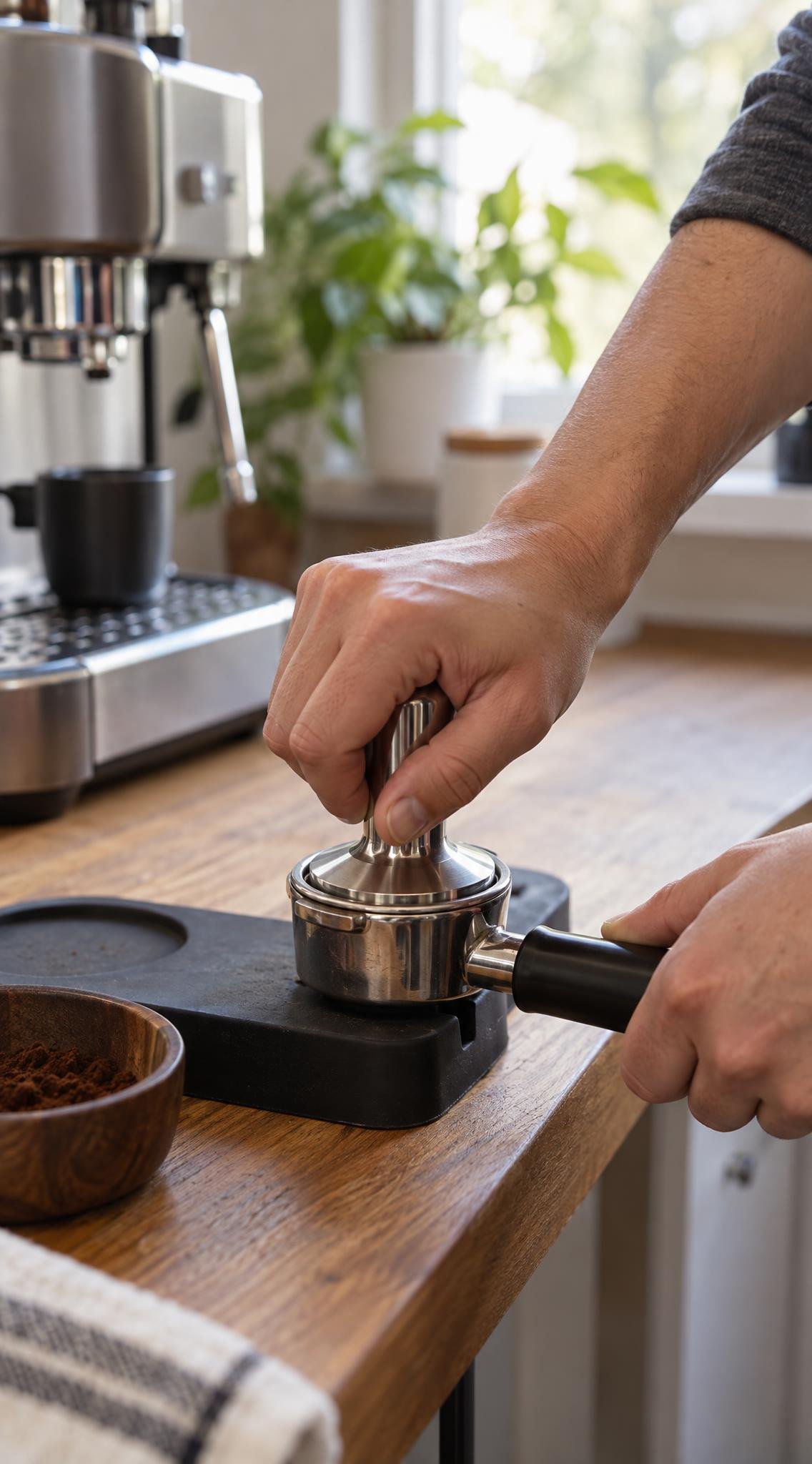
The key is to change one variable at a time. If you change dose and grind together, you cannot tell which one fixed or broke the shot.
- Lock in your dose. Weigh 18 g of beans on your scale, grind them, and weigh the grounds again in the portafilter. Keep this number the same for every shot while you dial in.
- Distribute and tamp the same way each time. Stir the grounds with a WDT tool to break up clumps, tap the basket level, then tamp flat and firm.
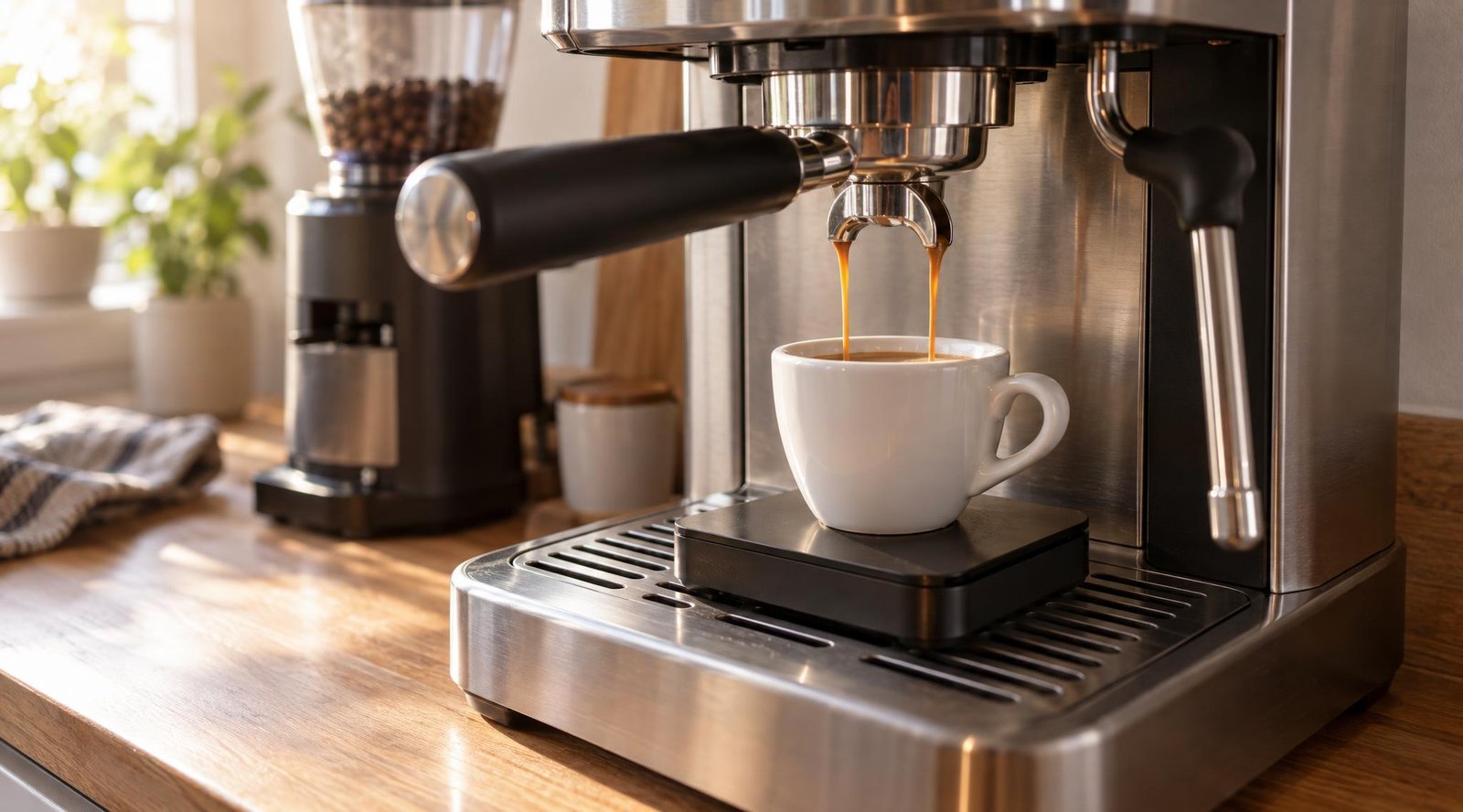
- Pull a shot onto the scale. Place your cup on the scale under the portafilter, tare to zero, and start the timer as you start the pump. Stop the shot when the scale reads about 34 g, since a few more drops will fall and bring you to 36 g.
- Read the time. Under 25 seconds means the grind is too coarse. Over 30 seconds means it is too fine.
- Adjust the grind only. Move the grinder one small step finer or coarser, purge a few grams of coffee to clear the old setting, and pull another shot with the same 18 g dose and 36 g yield.
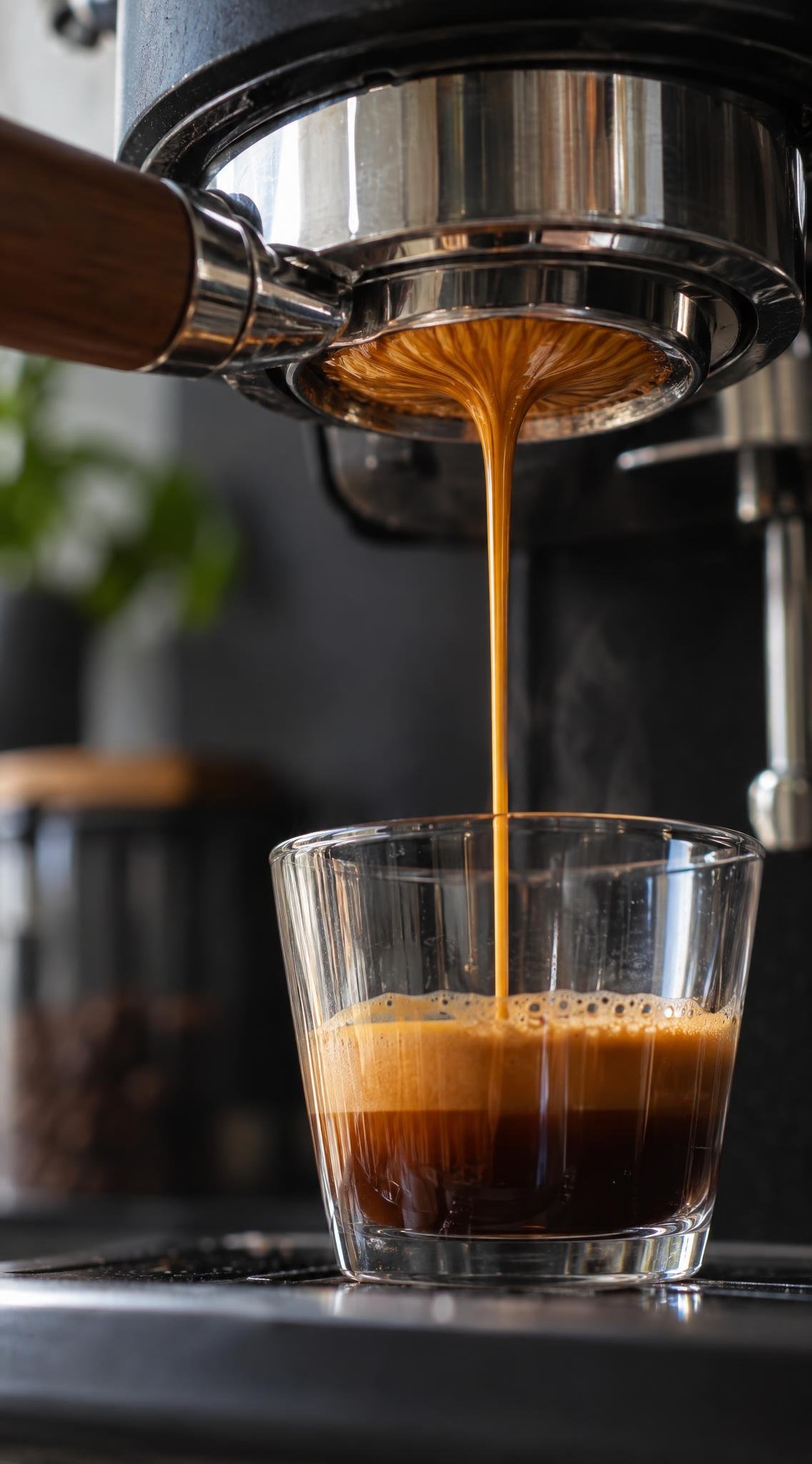
- Taste once the time is in range. When you are landing between 25 and 30 seconds, sip the shot. Sour or sharp means under-extracted. Bitter, dry or harsh means over-extracted.
- Fine tune with yield. If the shot is close but a little sour, keep the grind and let it run to 38 or 40 g. If it is a little bitter, stop it earlier at 32 to 34 g. This adjusts espresso extraction without touching the grinder.
- Write it down. Note the dose, yield, time and grinder setting so you can repeat the recipe tomorrow.
Espresso Troubleshooting: Sour, Bitter, Weak or Channeling
Make one change from this table, then pull another shot.
| Symptom | Likely cause | What to change |
|---|---|---|
| Sour, sharp, runs fast (under 25 seconds) | Under-extraction, grind too coarse | Grind finer. If time is already in range, increase yield by 2 to 4 g. |
| Bitter, dry, runs slow (over 30 seconds) | Over-extraction, grind too fine | Grind coarser. If time is already in range, reduce yield by 2 to 4 g. |
| Weak, thin, watery | Yield too high for the dose, dose too low, or stale beans | Stop the shot earlier, check your dose on the scale, and use fresher beans. |
| Channeling: spurting, uneven streams, sour and bitter together | Clumpy or uneven puck, crooked tamp | Stir with a WDT tool, level the bed, tamp flat. Then re-check the grind. |
Why Is My Espresso Too Sour?
Espresso too sour almost always means the water passed through too quickly and did not pull enough from the coffee. Grind finer in small steps until the shot slows into the 25 to 30 second range.
Why Is My Espresso Too Bitter?
Espresso too bitter usually means the water spent too long in the puck. Grind a little coarser, or keep the grind and stop the shot a few grams earlier.
Why Fresh Beans and a Scale Matter
Old beans are the most common reason a shot will not dial in. Coffee that has gone stale tends to run fast and taste flat no matter how fine you grind. Buy whole beans with a roast date printed on the bag, store them in an airtight coffee canister, and grind right before brewing. Our guide to the best espresso beans for home baristas has more on choosing a roast.
A scale is the other half. Scoops and volume buttons vary from shot to shot, and even a one gram difference in the basket can change your shot time. A small coffee scale with a timer that fits on your drip tray lets you measure dose, yield and time in one place. See our picks for the best coffee scales for espresso if you need one.
Marcus’s Pro Tips
- Make small grind moves. One step at a time on a stepped grinder, or a tiny nudge on a stepless one. Big jumps make you overshoot.
- Purge after every grind change. Run 2 to 3 g of coffee through and discard it so old grounds at the previous setting do not end up in your basket.
- Watch the shot from below. A bottomless portafilter shows channeling right away as spurts or gaps in the flow.
- Dial in again when things change. A new bag, an older bag or a big swing in kitchen humidity can all shift your grind setting.
Helpful Extras for More Consistent Shots
Nice to Have
Espresso knock box – quick puck cleanup between test shots
Espresso puck screen – helps water spread evenly over the coffee
Espresso shot glasses with measurement lines – low enough to fit on a scale under the spouts
Check portafilter and basket sizes before you order tampers, puck screens or bottomless portafilters. Common sizes are 51 mm, 54 mm and 58 mm, and they are not interchangeable.
Frequently Asked Questions
How many shots does it take to dial in espresso?
Most home baristas need three to six shots to dial in a new bag of beans. Once you know your grinder, a fresh bag of a similar roast often takes only one or two small adjustments.
What is the best espresso ratio for beginners?
A 1:2 ratio is the easiest place to start, for example 18 g of coffee in and 36 g of espresso out. From there, try a longer ratio like 1:2.5 for light roasts or a shorter one like 1:1.5 for dark roasts and see which you prefer.
How long should an espresso shot take?
A common target is about 25 to 30 seconds for a 1:2 shot, timed from when you start the pump. Treat that as a guide. If a shot at 23 or 32 seconds tastes balanced and sweet, keep it.
Should I change dose or grind size first?
Change grind size first and leave the dose alone. Grind has the biggest effect on shot time, and holding the dose steady keeps your results easy to compare from one shot to the next.
If your equipment is holding you back, see our guides to the best home espresso machines and the best burr grinders.

Marcus Webb writes about home coffee for BrewElevate. He researches and compares brewing gear, beans and recipes so home brewers can make a better cup without overspending. His rule: if he wouldn’t be comfortable buying it himself, it doesn’t make the list.