Philips 3200 LatteGo vs De’Longhi Magnifica Evo: Which Should You Buy?
Short on time?
Buy the Philips 3200 LatteGo if the thing you dread is cleaning a milk frother: its LatteGo system is two dishwasher-safe parts with no tubes, and it has a ceramic grinder and a front-loading water tank. Buy the De’Longhi Magnifica Evo with LatteCrema if you care more about the milk drink itself: you can adjust the foam texture, save your own milk recipe with My Latte, and it adds an iced coffee button. Tank size, brew group and footprint are close to a tie.
In the Philips 3200 LatteGo vs De’Longhi Magnifica Evo matchup, the Philips is the easier machine to keep clean and the De’Longhi gives you more control over milk drinks. Both are entry-level super-automatics with a 1.8 L water tank, a 15 bar pump, a removable brew group and one-touch cappuccino, so the choice comes down to the milk system, the grinder and the drink menu.
This comparison is based on manufacturer specifications, published features and common owner feedback, not on hands-on testing. Both machines sit in the mid-range tier for super-automatics and their prices move around often, so check the current price on Amazon before you decide.
The Machines in This Comparison
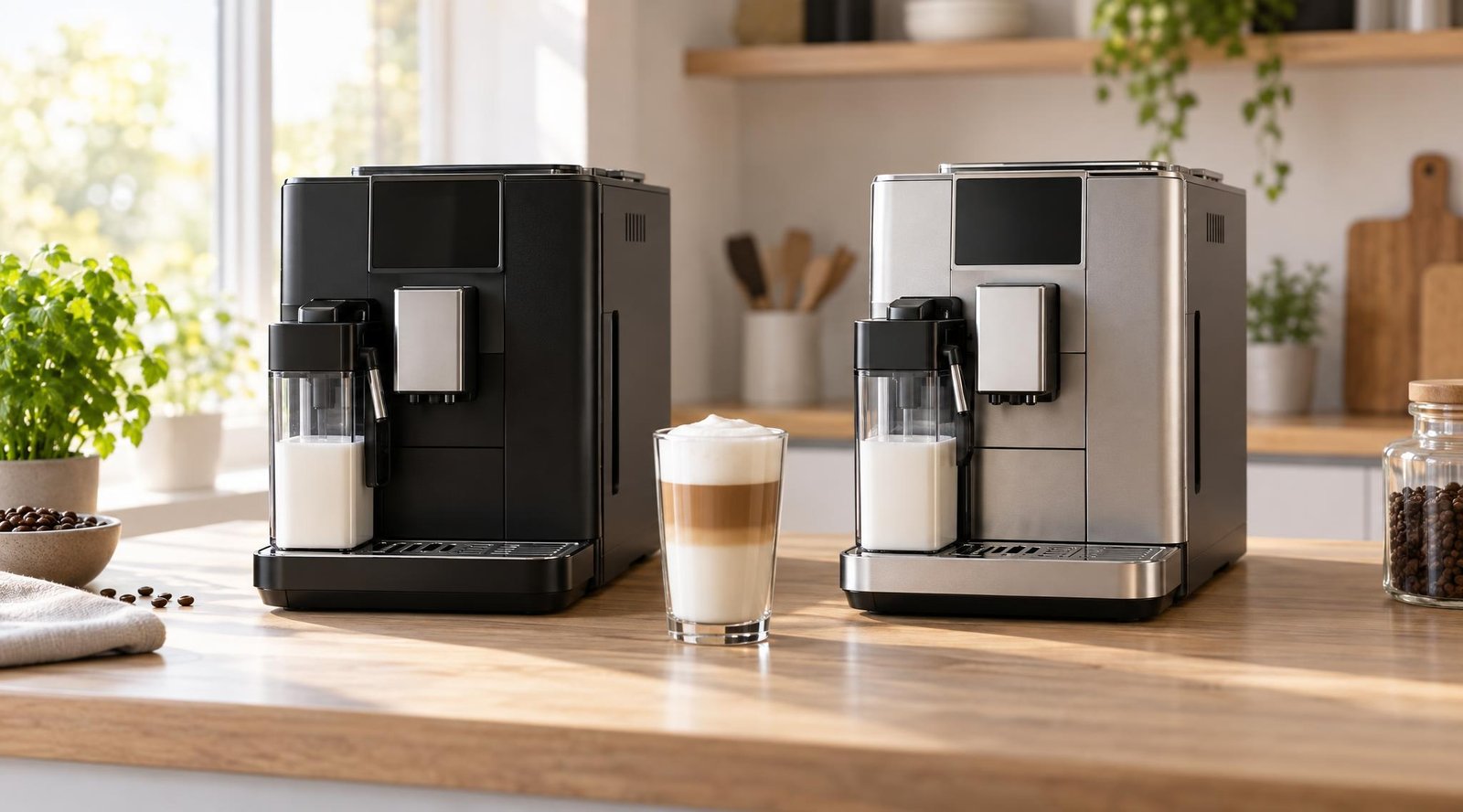
Philips 3200 LatteGo (EP3241/54) – two-part milk system, ceramic grinder, 5 coffee drinks
De’Longhi Magnifica Evo with LatteCrema (ECAM29084SB) – adjustable foam, My Latte, iced coffee
Philips 3200 LatteGo vs De’Longhi Magnifica Evo: Specs Side by Side
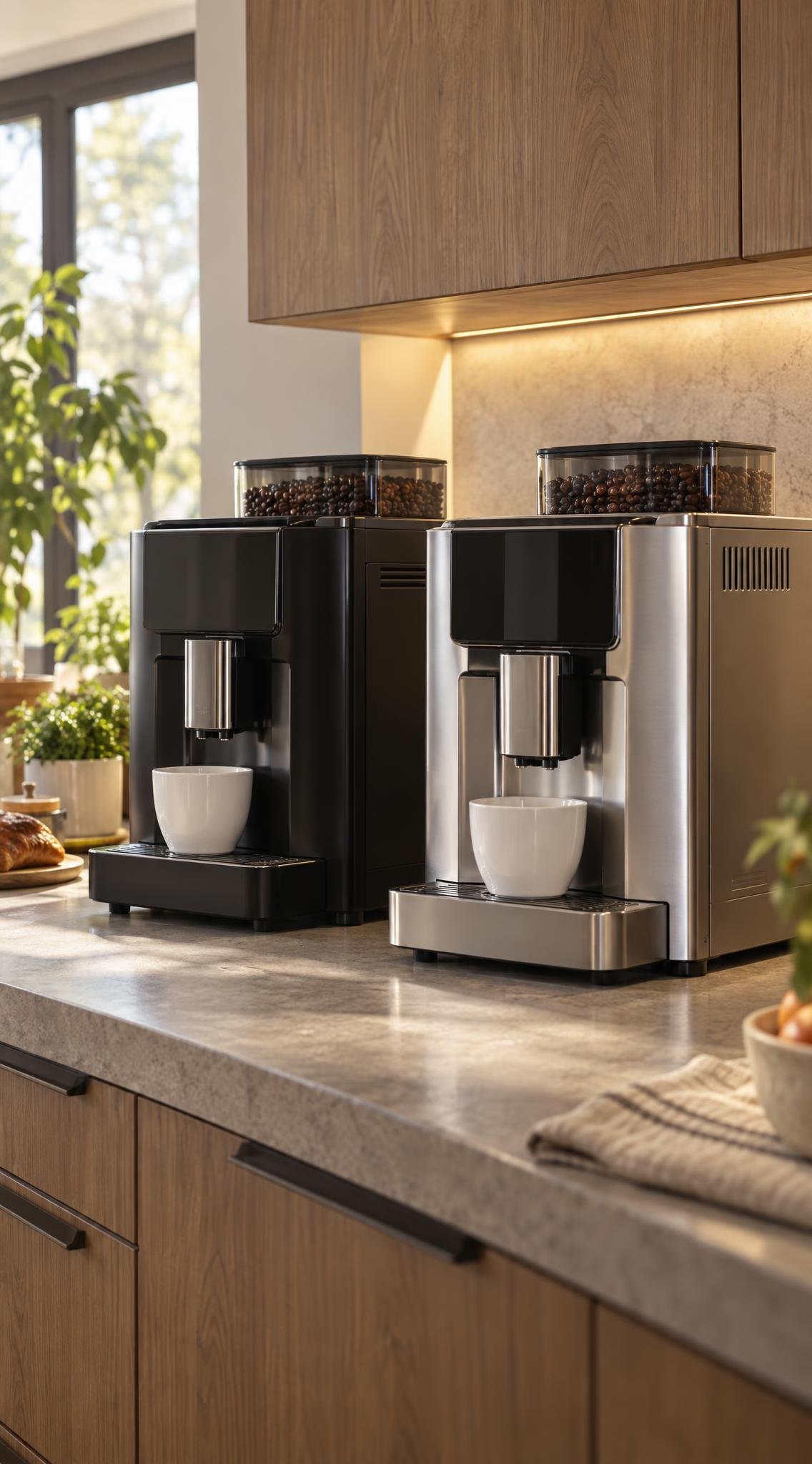
| Feature | Philips 3200 LatteGo (EP3241/54) | De’Longhi Magnifica Evo with LatteCrema (ECAM29084SB) |
|---|---|---|
| Drink menu | Espresso, coffee, americano, cappuccino, latte macchiato, plus hot water | Espresso, coffee, cappuccino, latte macchiato, iced coffee, My Latte, plus hot water |
| Milk system | LatteGo: 2 parts, no tubes, 0.26 L container | LatteCrema carafe with adjustable foam texture |
| Foam adjustment | No | Yes, on the carafe |
| Milk system cleaning | Both LatteGo parts are dishwasher safe | Carafe parts are dishwasher safe, with an auto-clean function |
| Grinder | 100% ceramic flat burrs, 12 settings | Steel conical burrs, 13 settings |
| Pre-ground coffee option | Yes | Yes |
| Strength settings | 3 | 3 |
| Water tank | 1.8 L (about 61 oz), front loading | 1.8 L (about 60 oz) |
| Bean hopper | 275 g (about 9.7 oz) | 250 g (about 8.8 oz) |
| Brew group | Removable | Removable |
| Controls | Touch display with drink icons and indicator lights | Soft-touch panel with color drink icons |
| Pump | 15 bar | 15 bar |
| Size (W x D x H) | About 9.7 x 17.0 x 14.6 in | About 9.4 x 17.3 x 14.2 in |
| Weight | About 18 lb (8 kg) | About 21 lb (9.6 kg) |
| Price tier | Mid-range | Mid-range |
A note on model names: both lines are sold in several versions. This article compares the Philips EP3241/54 with the LatteGo milk system and the De’Longhi ECAM29084SB with the LatteCrema carafe. Each brand also sells a version with a manual steam wand instead, so check the model number on the listing before you order.
What Is the Same on Both Machines?
Quite a lot. Both grind whole beans fresh for every cup, tamp and brew automatically, and drop the used puck into an internal container. Both have a 1.8 L removable water tank, a 15 bar pump, three coffee strength settings and a chute for pre-ground coffee, which is handy for the occasional decaf.
Both also have a brew group you can pull out and rinse under the tap, and both froth milk automatically into your cup at the press of a button. Neither has a full color touchscreen, and neither saves separate profiles for different people in the house.
Philips 3200 LatteGo: Strengths and Drawbacks
The Philips 3200 LatteGo EP3241/54 is built around low-effort ownership. Philips lists five coffee drinks (espresso, coffee, americano, cappuccino and latte macchiato) plus hot water, all picked from a touch display with one icon per drink.
What the Philips does well
- The simplest milk system to clean. LatteGo is two parts that clip together, with no tubes or hidden channels. Both parts are dishwasher safe, and the container holds 0.26 L of milk.
- Ceramic grinder. Philips uses 100% ceramic burrs with 12 grind settings.
- Front-loading water tank. The 1.8 L tank slides out from the front, so you can refill it without pulling the machine out from under a cabinet.
- Long gaps between descaling. With Philips’s AquaClean filter fitted and replaced when the machine prompts you, Philips says you can go up to 5,000 cups without descaling.
- Slightly larger hopper. It holds 275 g of beans, and the grounds container takes 12 pucks before it needs emptying.
Where the Philips falls short
- No foam adjustment. You get one foam texture. Published reviews describe it as dense, which suits cappuccino better than a silky latte.
- Shorter drink menu. There is no iced coffee setting and no custom milk recipe button.
- Noise. Reviewers often describe the ceramic grinder as loud.
- Basic display. Strength shows as a row of indicator lights with three levels, so fine-tuning is limited.
De’Longhi Magnifica Evo: Strengths and Drawbacks
The De’Longhi Magnifica Evo with LatteCrema ECAM29084SB takes the opposite approach: a little more to clean, a lot more say over the drink. De’Longhi lists seven one-touch recipes: espresso, coffee, cappuccino, latte macchiato, iced coffee, My Latte and hot water.
What the De’Longhi does well
- Adjustable milk foam. The LatteCrema carafe lets you choose between light, creamy and dense foam.
- My Latte. This button lets you personalize a milk recipe, so your usual latte is one press away.
- Iced coffee. A dedicated recipe for coffee brewed to be poured over ice, which the Philips 3200 does not offer.
- Steel conical burr grinder with 13 settings. One more step than the Philips. The dial is numbered 1 to 7, with 1 the finest.
- Clear controls. A soft-touch panel with a color icon for each drink.
Where the De’Longhi falls short
- More milk parts to deal with. The carafe has a lid and frothing parts rather than two open pieces. They are dishwasher safe and the carafe has an auto-clean function, but it is still more steps than LatteGo.
- Slightly smaller hopper. It holds 250 g of beans against the Philips’s 275 g.
- Heavier. At about 21 lb, it is roughly 3 lb heavier than the Philips, which you will notice if you slide it out to refill.
- No americano button. You can add hot water to an espresso yourself, but it is two steps instead of one.
Drink Menu: Which Machine Makes More Drinks?
The De’Longhi. Both cover espresso, regular coffee, cappuccino, latte macchiato and hot water. The Philips adds a one-touch americano. The De’Longhi adds iced coffee and the customizable My Latte.
If you drink americanos every day, that button on the Philips is a real convenience. If your household leans toward lattes and summer iced drinks, the Magnifica Evo menu fits better. For iced drinks from either machine, a set of double wall latte glasses keeps condensation off the counter.
Milk System and Cleaning: LatteGo vs LatteCrema
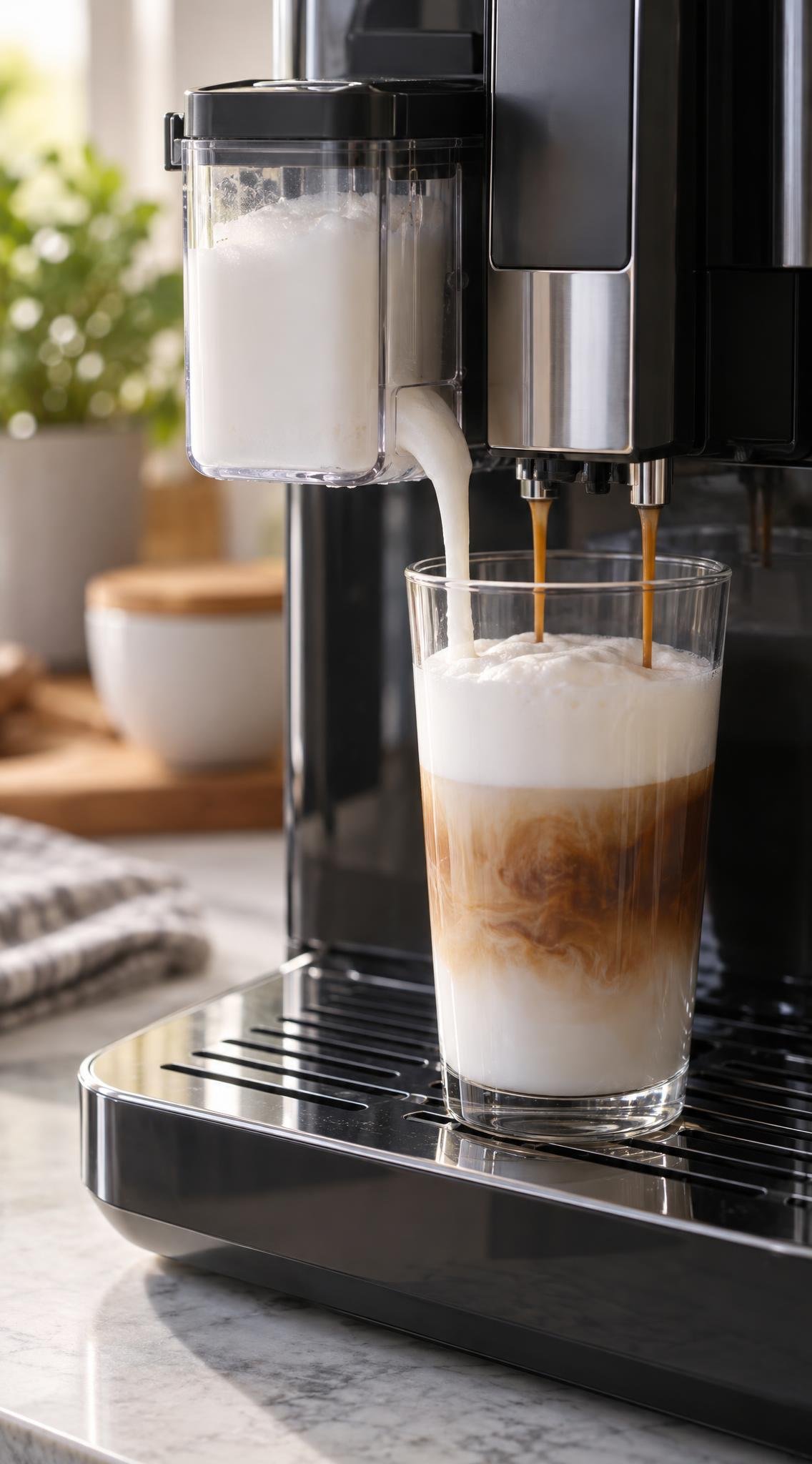
Philips LatteGo
LatteGo mixes milk and air in a small chamber and pours it straight into the cup. Because there are only two parts and no tubes, there is nowhere for old milk to hide. You can rinse it under the tap or put both parts in the dishwasher. The trade-off is that you cannot change the foam.
De’Longhi LatteCrema
The LatteCrema carafe attaches to the front of the machine, and you pick the foam texture on the carafe, from light to dense. Cleaning takes a bit longer: use the auto-clean function after milk drinks and take the carafe apart for a proper wash on a regular basis.
Neither system will give you the microfoam of a manual steam wand. If latte art matters to you, a semi-automatic machine or a separate frother is a better route, and our guide to the best milk frothers for home baristas covers the options.
Grinder Type and Settings: Ceramic vs Steel
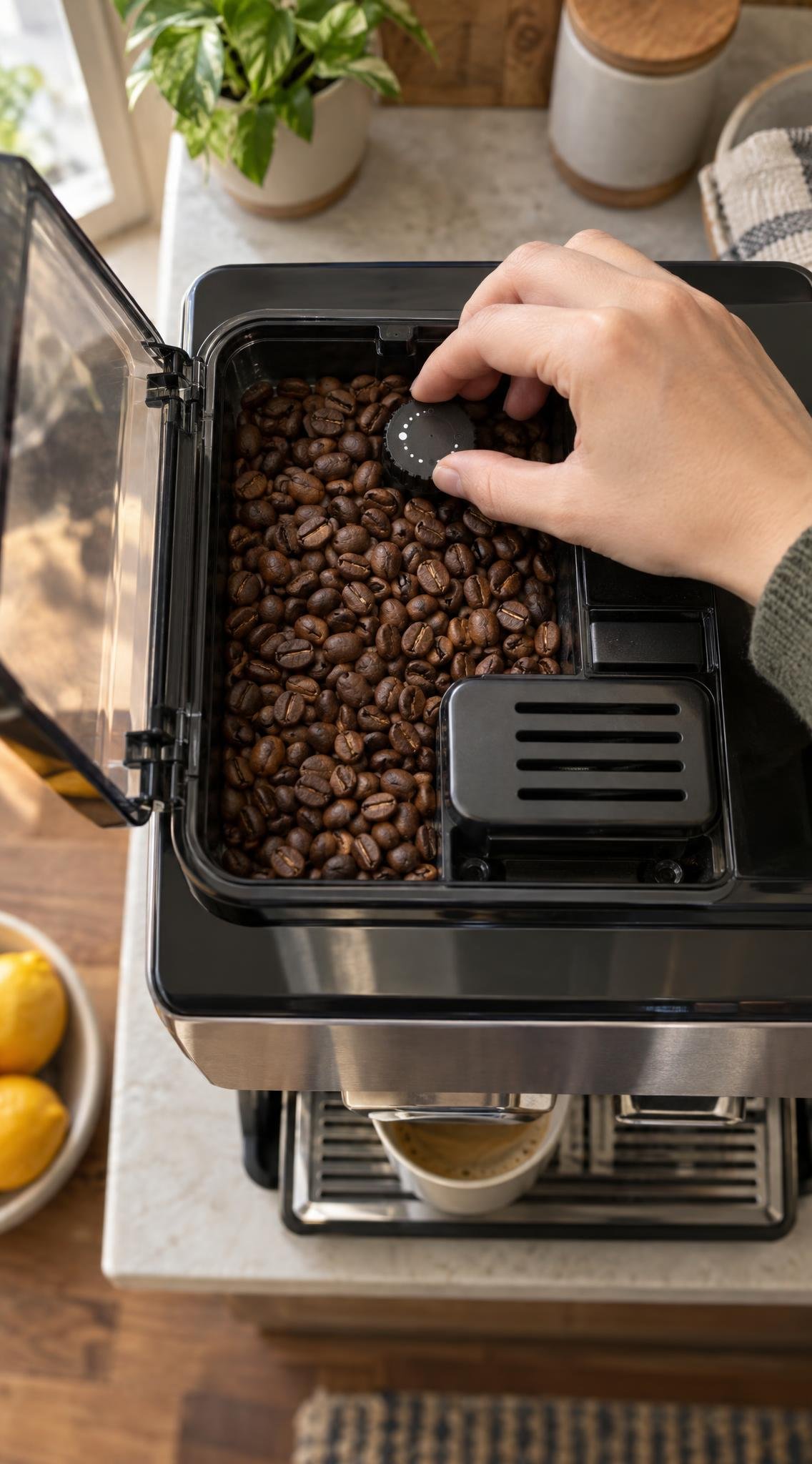
The Philips 3200 uses ceramic flat burrs with 12 settings. The Magnifica Evo uses steel conical burrs with 13 settings.
What matters more is how you use the grinder. On the Philips, the adjustment wheel sits inside the bean hopper and is adjusted while the grinder is running. Change one step at a time and brew two or three cups before you judge the result.
Both grinders do best with medium or medium-dark beans that are dry to the touch. A bag of non-oily medium roast espresso beans is a safe starting point for either machine.
Water Tank, Bean Hopper and Brew Group
Water tank: a tie on size at 1.8 L. The Philips tank loads from the front, which helps under low cabinets.
Bean hopper: 275 g on the Philips, 250 g on the De’Longhi. Neither quite swallows a full 12 oz (340 g) bag in one go, so keep the rest sealed until there is room.
Brew group: removable on both. That is a real advantage over super-automatics with a fixed brew unit, because you can rinse away old coffee residue yourself. Follow each manual for how often to rinse it.
Water filter and descaling: the Philips takes an AquaClean filter, which is what makes the up to 5,000 cup descaling claim possible. For either machine, keep a bottle of descaling solution on hand for when the machine asks for a descale.
Display and Controls: Which Is Easier to Use?
The Philips pairs its touch display with indicator lights for settings such as strength. The De’Longhi uses a soft-touch panel with color icons and gives milk drinkers more to adjust through the carafe and My Latte. If you want user profiles or a proper screen, you need to move up a tier, and our roundup of the best super-automatic espresso machines shows what that step looks like.
Footprint: Which One Fits a Small Counter?
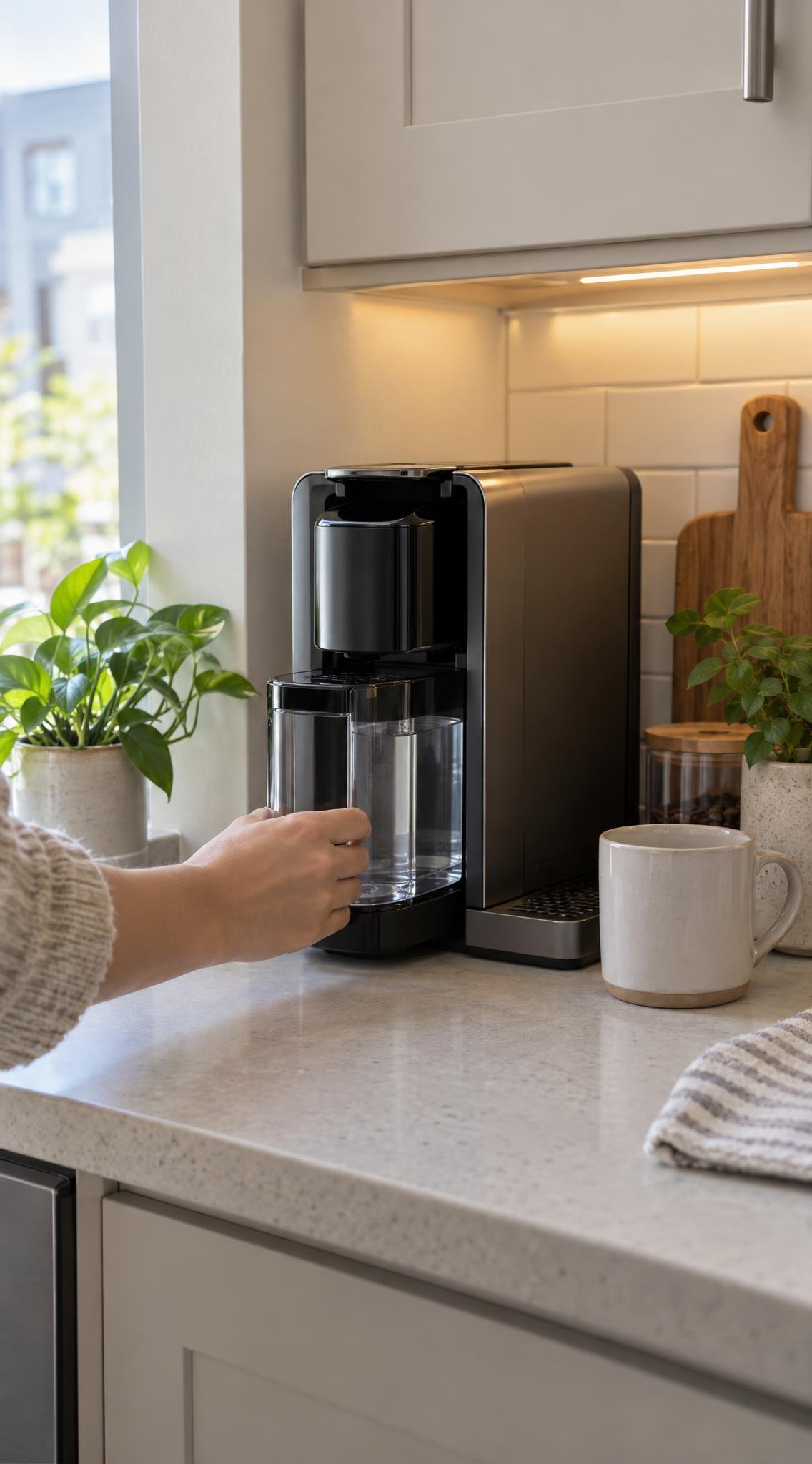
They are nearly the same size. The Philips measures about 9.7 inches wide, 17.0 inches deep and 14.6 inches tall. The De’Longhi measures about 9.4 inches wide, 17.3 inches deep and 14.2 inches tall. Both are narrow and deep, so the dimension to check is counter depth, plus clearance above for refilling beans.
Who Should Buy the Philips 3200 LatteGo and Who Should Buy the De’Longhi Magnifica Evo?
Choose the Philips 3200 LatteGo if:
- You want the least possible milk cleanup and will use the dishwasher.
- You drink americanos, cappuccinos and regular coffee and do not need to tweak foam.
- Your machine will live under a cabinet and a front-loading tank matters.
- You would rather change a filter than descale often.
Choose the De’Longhi Magnifica Evo if:
- You are particular about foam and want to choose light, creamy or dense.
- You make iced coffee at home.
- You want one button saved to your own latte recipe.
- You do not mind a few extra minutes of carafe cleaning each week.
If you are still deciding between a super-automatic and a machine with a portafilter, our Breville vs De’Longhi comparison explains the difference in daily effort.
Marcus’s Pro Tips
- Skip oily, very dark beans. Shiny beans can gum up the grinder and brew group on any super-automatic. Pick beans that look matte.
- Change the grind slowly. One step at a time, then brew a few cups before you change it again.
- Start at the strongest setting. Set strength to the highest of the three levels and shorten the volume if your espresso tastes thin.
- Clean the milk system the same day. Rinse LatteGo or run the LatteCrema clean function right after your last milk drink. Dried milk is much harder to remove.
- Warm the cup. Run a little hot water into your cup first and tip it out. It keeps a small espresso hot for longer.
Frequently Asked Questions
Which is better, the Philips 3200 LatteGo or the De’Longhi Magnifica Evo?
Neither is better across the board. The Philips 3200 LatteGo is better for easy cleaning, thanks to its two-part milk system and AquaClean filter. The De’Longhi Magnifica Evo is better for milk drinks, with adjustable foam, My Latte and an iced coffee recipe.
Which one is easier to clean?
The Philips 3200 LatteGo. Its milk system has two dishwasher-safe parts and no tubes. The De’Longhi LatteCrema carafe is also dishwasher safe and has an auto-clean function, but it has more pieces. Both machines have a removable brew group you can rinse under the tap.
Can you adjust the milk foam on the Philips 3200 LatteGo?
No. LatteGo produces one foam texture. On the De’Longhi Magnifica Evo, the LatteCrema carafe lets you choose between light, creamy and dense foam.
Is a ceramic grinder better than a steel grinder?
Not in a way most people will taste. The Philips uses ceramic burrs with 12 settings and the De’Longhi uses steel conical burrs with 13 settings. Bean freshness and choosing the right setting matter more than the burr material at this level.
Can I use pre-ground coffee in these machines?
Yes, both accept pre-ground coffee as well as whole beans. It is most useful for an occasional decaf, since the main hopper holds only one kind of bean at a time.
Can the Philips 3200 LatteGo make iced coffee?
It has no iced coffee setting. You can brew an espresso or a short coffee over ice, but the De’Longhi Magnifica Evo is the one with a dedicated iced coffee recipe.
The Verdict: Philips 3200 LatteGo or De’Longhi Magnifica Evo?
If you want good coffee with as little upkeep as possible, the Philips 3200 LatteGo is the safer pick: two-part milk system, front-loading tank, ceramic grinder and long gaps between descaling. If milk drinks are the reason you are buying a super-automatic, the De’Longhi Magnifica Evo with LatteCrema earns its place with adjustable foam, My Latte and iced coffee. On tank size, brew group and footprint, you lose nothing either way.
Want to see how these two stack up against pricier models? Read our guide to the best super-automatic espresso machines, or browse the best home espresso machines if you are open to a manual machine. Check the current price of both on Amazon before you decide.

Marcus Webb writes about home coffee for BrewElevate. He researches and compares brewing gear, beans and recipes so home brewers can make a better cup without overspending. His rule: if he wouldn’t be comfortable buying it himself, it doesn’t make the list.