
Best Coffee Maker with Grinder Built In
Best Coffee Maker with Grinder Built In: 5 Machines Worth Considering
Affiliate Disclosure: BrewElevate is reader-supported. When you buy through links on our site, we may earn an affiliate commission at no extra cost to you. We only recommend products we’d use ourselves. Learn more →
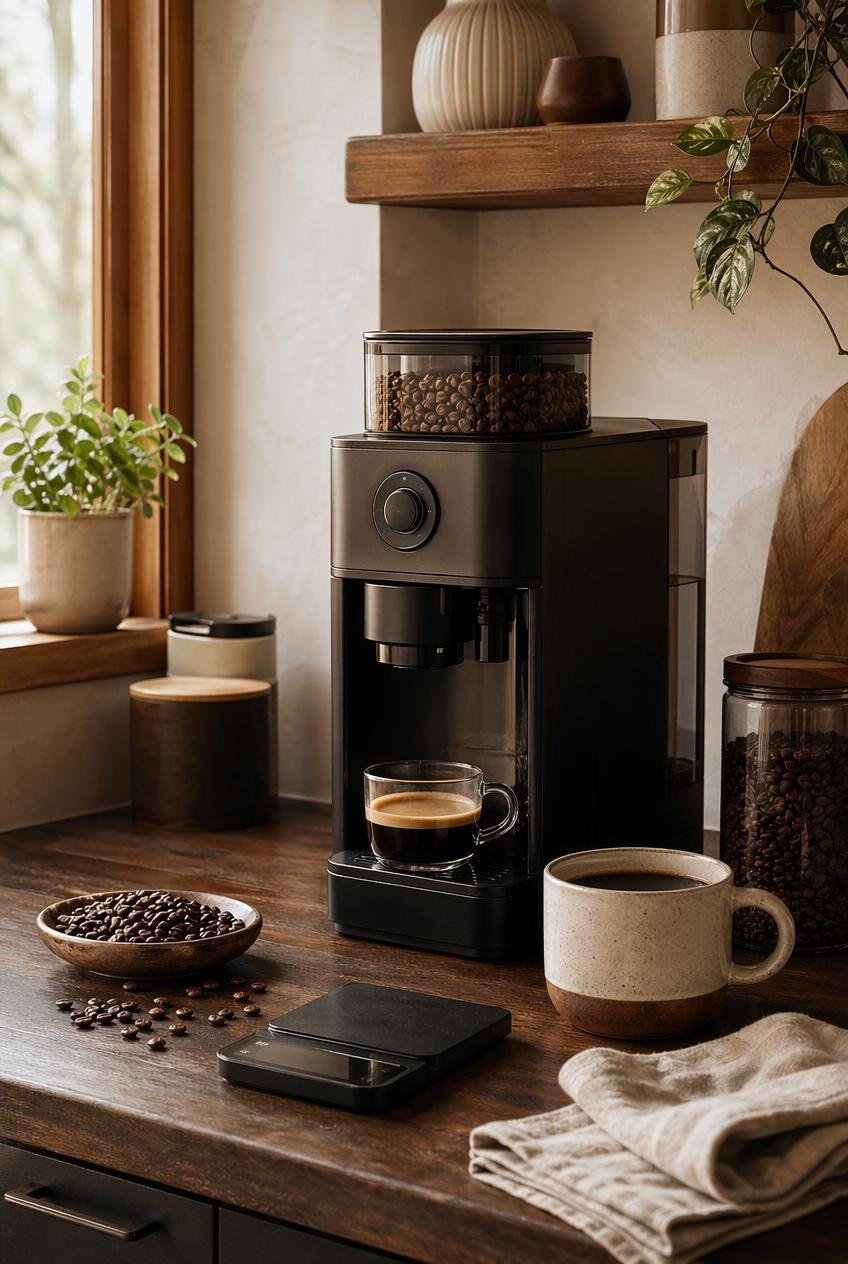
A coffee maker with a grinder built in solves one of the biggest problems in home brewing: stale grounds. Coffee loses aroma quickly after grinding, and no amount of fancy buttons can bring that sweetness back once it is gone.
The right machine can make your morning routine simpler without flattening the cup. The wrong one gives you a loud grinder, uneven extraction, and coffee that tastes like it was brewed from tired beans.
For this guide, I am looking at machines through a home brewer’s lens: grind consistency, ease of use, cup quality, milk drink performance, cleanup, and whether the machine actually helps you make better coffee instead of just taking up counter space.
One note before we begin: most of the machines below include a built-in grinder. The Ninja model is the exception. It is included because many shoppers compare it against grind-and-brew machines when looking for an all-in-one specialty coffee setup, but it does not have a built-in grinder.
| Product | Best For | Grinder Type |
|---|---|---|
| Breville Barista Express | Hands-on espresso at home | Integrated conical burr grinder |
| De’Longhi Magnifica Evo | Easy espresso and milk drinks | Built-in burr grinder |
| Cuisinart Grind & Brew DGB-900BC | Freshly ground drip coffee | Built-in burr grinder |
| Ninja Specialty Coffee Maker | Specialty-style coffee drinks | No built-in grinder |
| Philips 3200 Series Fully Automatic Espresso Machine | Push-button espresso drinks | Built-in ceramic burr grinder |
The Best Coffee Maker with Grinder: Full Reviews
1. Breville Barista Express
Type: Semi-automatic espresso machine
Grinder type: Integrated conical burr grinder
Best for: Home baristas who want control over espresso without buying a separate grinder
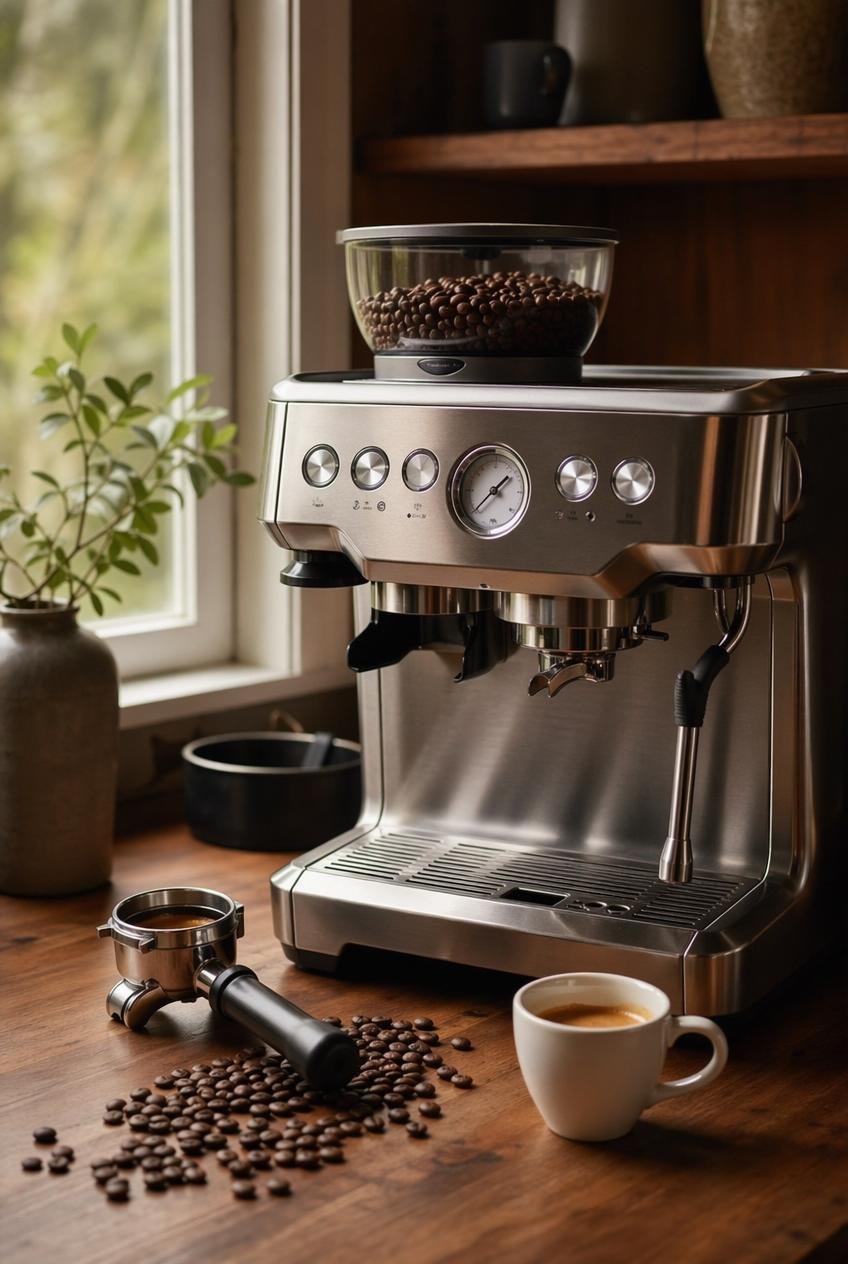
The Breville Barista Express is the machine I would point to first for someone who wants to learn espresso properly without building a whole separate grinder-and-machine setup. It gives you a real portafilter workflow, a built-in conical burr grinder, dose control, steam wand, and enough manual involvement to teach you what espresso actually responds to.
In the cup, the Barista Express can produce sweet, syrupy shots when paired with fresh medium or medium-dark beans. You can chase chocolate, caramel, toasted almond, and dried fruit notes if your grind is close and your puck prep is consistent. It will not hide every mistake, but that is part of its value. It helps you taste what changed.
The built-in grinder is convenient, though not as refined as a dedicated espresso grinder. You may wish for smaller adjustment steps once your palate sharpens. Still, for a home barista who wants a compact all-in-one machine and does not mind learning, this is one of the strongest choices in the category.
✅ Pros:
- Real espresso workflow with grinding, dosing, tamping, and steaming
- Good balance of convenience and control
- Strong choice for cappuccinos, lattes, and straight espresso
- Compact compared with buying a separate grinder and espresso machine
❌ Cons:
- Requires practice to get consistently good shots
- Built-in grinder has limits compared with dedicated espresso grinders
- Cleanup is more involved than a fully automatic machine
2. De’Longhi Magnifica Evo
Type: Fully automatic espresso machine
Grinder type: Built-in burr grinder
Best for: Espresso and milk drinks with less manual work
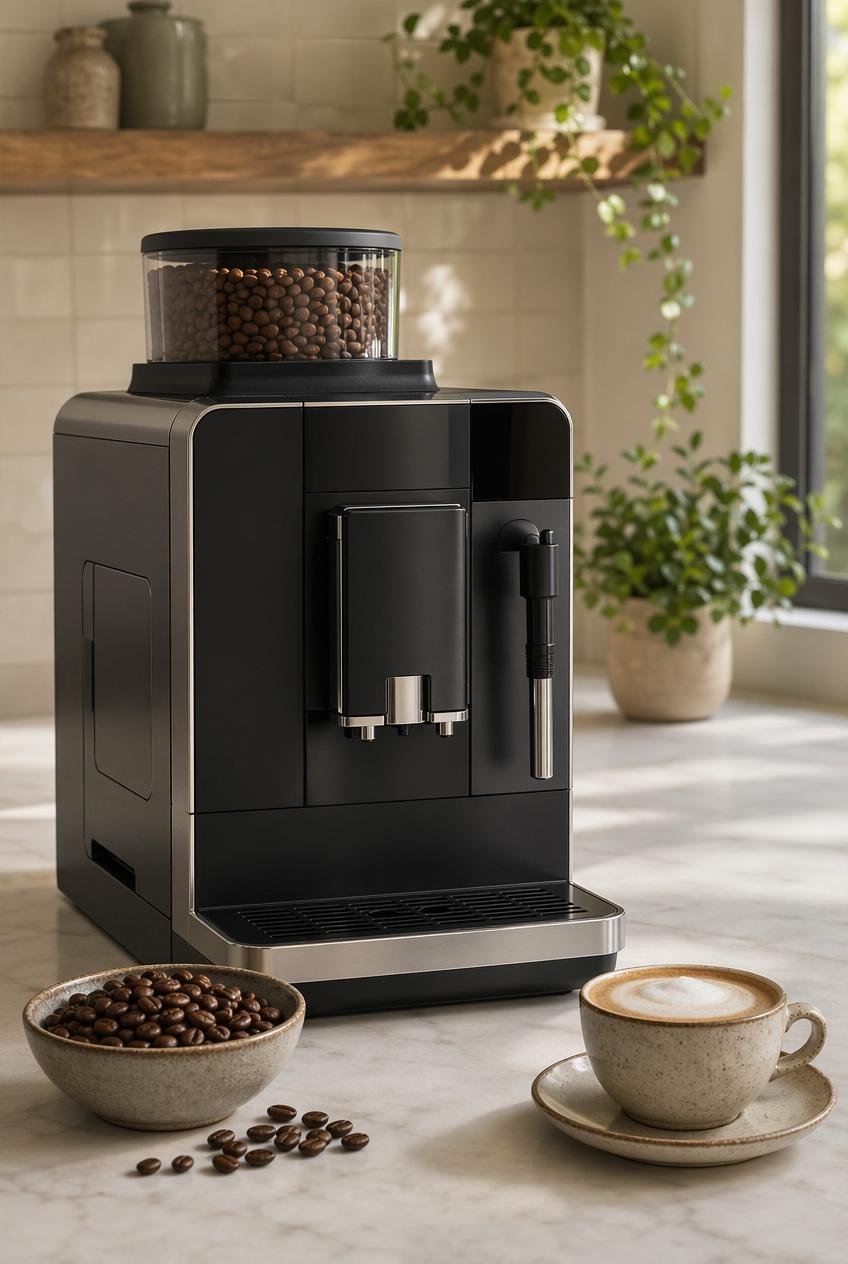
The De’Longhi Magnifica Evo is for the person who wants freshly ground espresso drinks without turning the morning counter into a barista station. It grinds, doses, brews, and handles drink programming in a much more automated way than the Breville.
The cup style leans toward convenience espresso rather than hands-on café espresso. With the right beans, you can get pleasant chocolate, toasted nut, and mild caramel notes, especially in milk drinks. It is not the machine I would choose for dissecting delicate single-origin espresso, but for daily cappuccinos and americanos, it makes a lot of sense.
The appeal here is rhythm. Fill the hopper, keep the water tank fresh, manage the milk system, and the machine does the repeatable work. If you want espresso with less fuss and you are comfortable trading some control for convenience, the Magnifica Evo is a very practical middle ground.
✅ Pros:
- Freshly grinds beans for each drink
- Much easier than a semi-automatic espresso workflow
- Good fit for daily milk drinks
- More consistent for households with multiple coffee drinkers
❌ Cons:
- Less control than a semi-automatic espresso machine
- Milk systems need regular cleaning
- Not ideal for someone who wants to manually dial in every shot
3. Cuisinart Grind & Brew DGB-900BC
Type: Automatic drip coffee maker
Grinder type: Built-in burr grinder
Best for: Freshly ground drip coffee by the pot
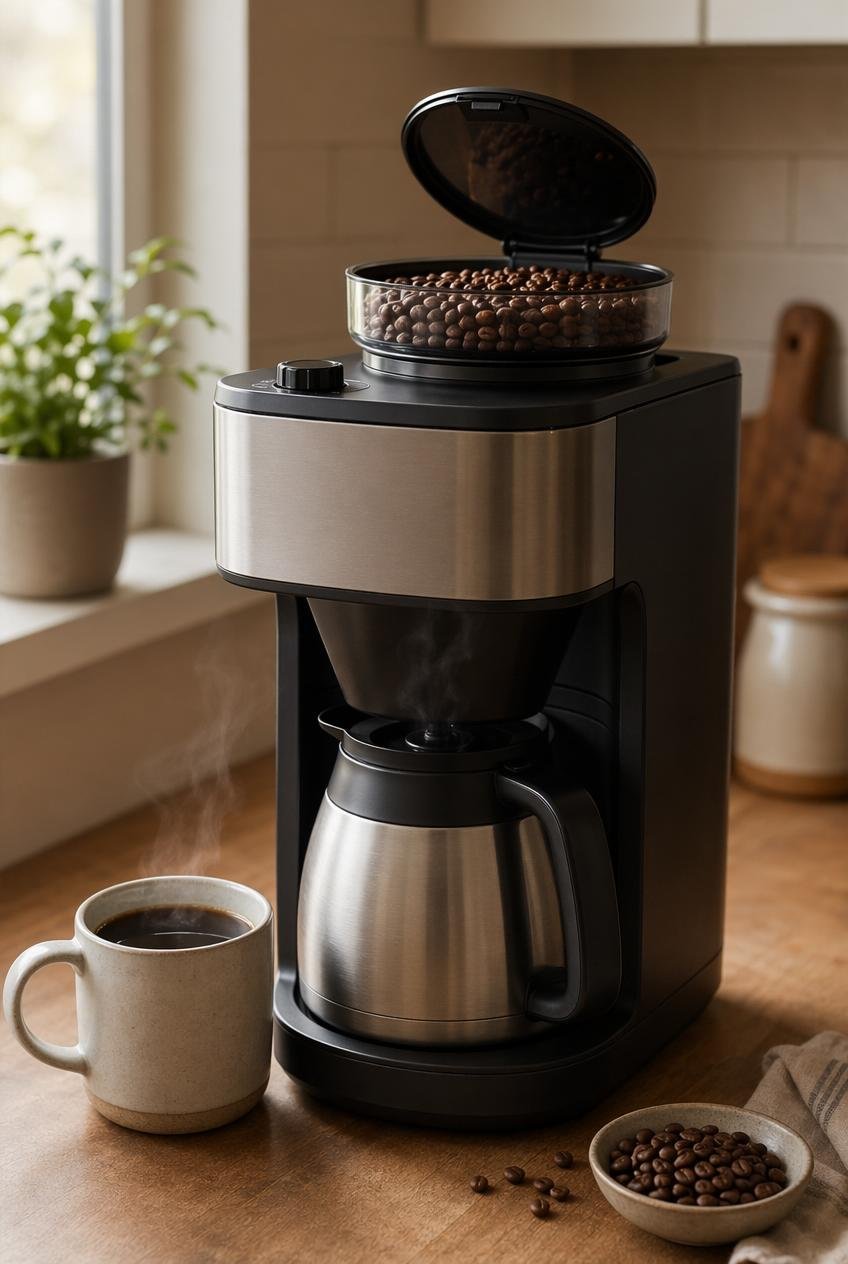
The Cuisinart Grind & Brew DGB-900BC is the most straightforward choice here if you want drip coffee rather than espresso. It grinds whole beans before brewing and sends the coffee into a thermal carafe, which helps preserve warmth without cooking the coffee on a hot plate.
The cup profile depends heavily on the beans you use and how clean you keep the grinder chute. With a balanced medium roast, you can get a round, familiar pot of coffee with more aroma than you would get from pre-ground beans. Think cocoa, toasted grain, brown sugar, and a softer acidity.
This is not for espresso drinkers. It will not make crema, and it will not replace a proper espresso machine. But if your household wants fresh-ground drip coffee in larger batches, the Cuisinart makes sense because it focuses on the actual morning habit: grinding and brewing a pot without extra steps.
✅ Pros:
- Good fit for households that brew full pots
- Built-in burr grinder is better than blade-style grinding
- Thermal carafe helps protect brewed coffee from scorched flavors
- More convenient than grinding separately before drip brewing
❌ Cons:
- Does not make espresso
- Grinder chute needs regular cleaning
- Less flexible than using a separate grinder and manual brewer
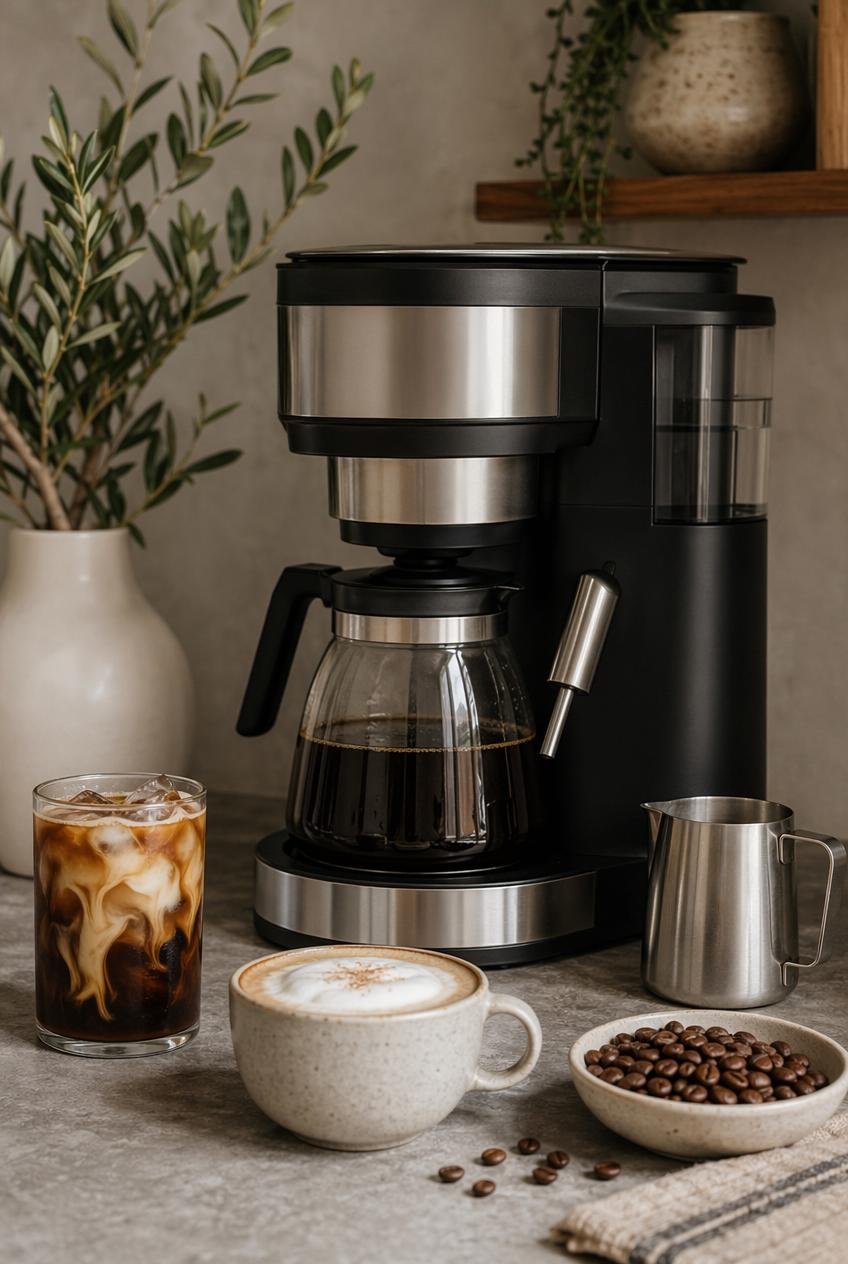
4. Ninja Specialty Coffee Maker with Built-In Frother
Type: Specialty drip-style coffee maker
Grinder type: No built-in grinder
Best for: Households that want specialty-style coffee drinks and already own a grinder
The Ninja Specialty Coffee Maker with Built-In Frother needs a clear note: it is not a true coffee maker with a grinder built in. If you want one appliance that stores beans, grinds them, and brews from whole coffee, this is not that machine.
That said, it earns a place in the conversation because it appeals to the same buyer who wants fewer coffee gadgets on the counter. It can make concentrated coffee for iced drinks, frothy milk-style drinks, and everyday brewed coffee. Pair it with a decent burr grinder and freshly ground medium roast beans, and the cup can be much better than capsule-style convenience coffee.
I would choose this only if you care more about drink variety than built-in grinding. It is a flexible brewer, not a grind-and-brew machine. For the right kitchen, that distinction matters. For the wrong buyer, it will feel like a missing feature from day one.
✅ Pros:
- Versatile drink options for hot, iced, and concentrated coffee
- Built-in frother adds value for milk-style drinks
- Good option if you already own a burr grinder
- Less intimidating than espresso machines
❌ Cons:
- No built-in grinder
- Does not make true espresso
- Requires a separate grinder for the freshest results
5. Philips 3200 Series Fully Automatic Espresso Machine
Type: Fully automatic espresso machine
Grinder type: Built-in ceramic burr grinder
Best for: Push-button espresso, coffee, cappuccino, and latte-style drinks
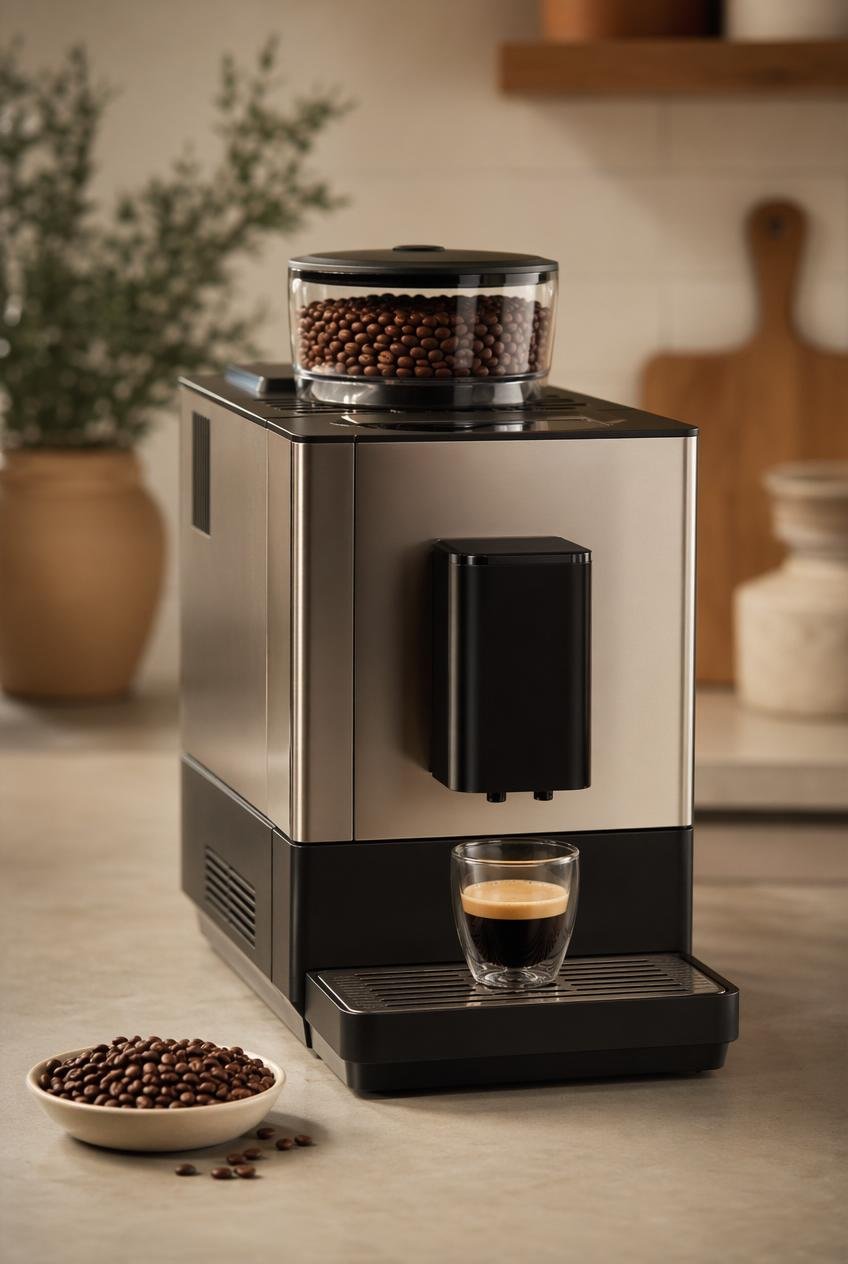
The Philips 3200 Series Fully Automatic Espresso Machine is for the household that wants fresh-ground espresso drinks with the fewest decisions possible. Beans go in the hopper, water goes in the tank, and the machine handles the grinding, brewing, and drink selection.
Flavor-wise, this machine performs best with medium or medium-dark beans that have enough body to hold up through the automatic brewing system. Expect a smooth, accessible cup rather than a hyper-detailed espresso bar shot. With the right beans, the profile can lean toward cocoa, toasted nut, soft caramel, and mild roast sweetness.
The Philips makes the most sense when convenience matters as much as flavor. It is not a teaching machine the way the Breville is. It is a daily-driver machine: press a button, get a fresh-ground drink, clean the milk and brew systems, repeat tomorrow.
✅ Pros:
- Very convenient for daily espresso-style drinks
- Built-in ceramic burr grinder
- Good for households with different drink preferences
- Less hands-on than semi-automatic espresso machines
❌ Cons:
- Less manual control over extraction
- Automatic milk and brew systems require regular care
- Not the best choice for someone who wants to learn traditional espresso technique
How to Choose the Right Coffee Maker with Grinder
Decide Whether You Want Espresso or Drip Coffee
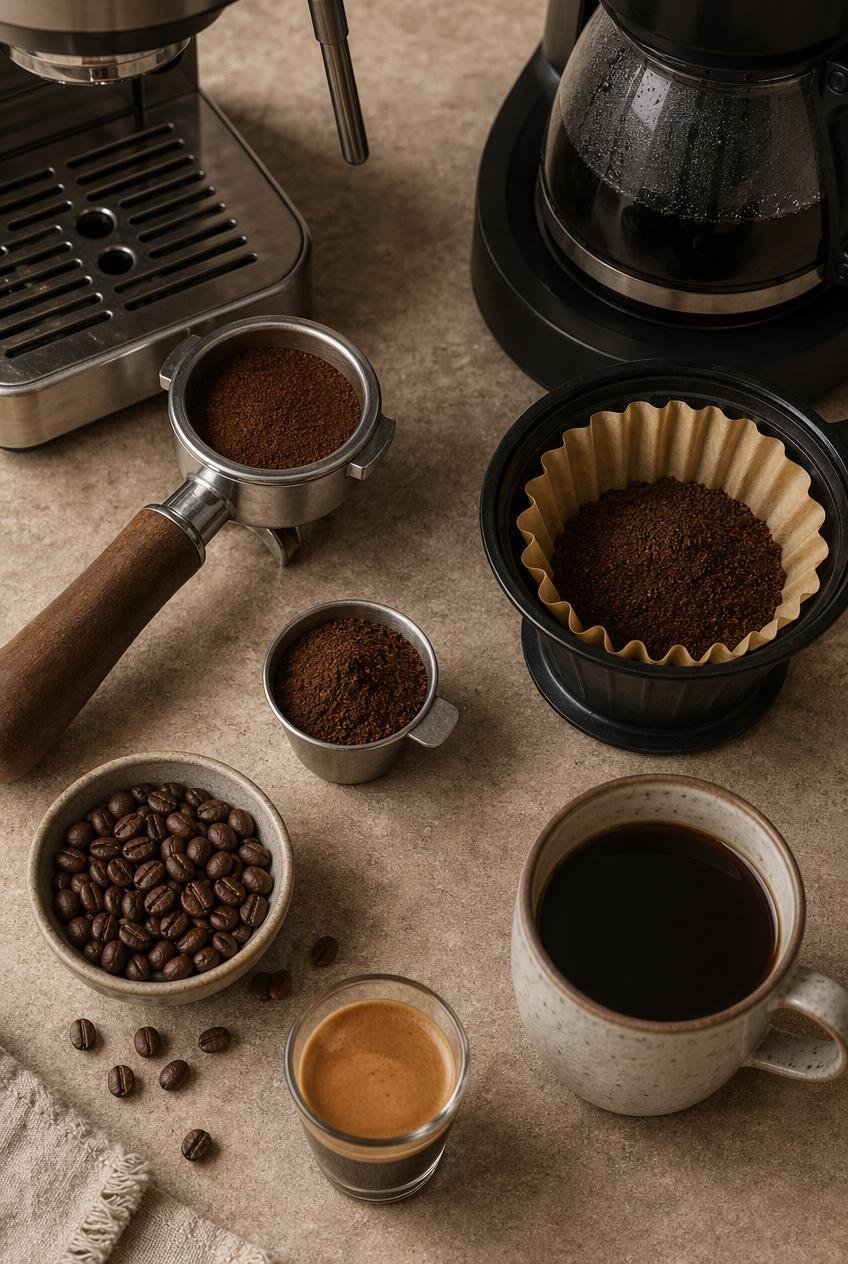
This is the first fork in the road. Espresso machines use pressure to produce a concentrated shot with crema. Drip coffee makers use gravity and time to brew larger servings. A machine like the Breville Barista Express or Philips 3200 belongs in the espresso family. The Cuisinart Grind & Brew belongs in the drip coffee family.
If your ideal morning drink is a cappuccino, latte, americano, or straight shot, look at espresso machines. If you want a full thermal carafe for the household, look at grind-and-brew drip brewers.
Look for a Burr Grinder, Not a Blade Grinder
Burr grinders crush beans between two abrasive surfaces, which gives you a more controlled particle size. Blade grinders chop coffee unevenly. Uneven grounds make extraction messy: some particles over-extract into bitterness while others under-extract into sourness.
For coffee makers with grinders built in, a burr grinder is one of the most important features. It does not need to be a competition-level grinder, but it should be stable enough to give the brewer a fair chance.
Match the Machine to Your Patience Level
The Breville Barista Express gives you the most hands-on learning experience, but it also asks more from you. You need to dose, distribute, tamp, purge, steam, and adjust. That is rewarding if you enjoy the craft.
Fully automatic machines like the De’Longhi Magnifica Evo and Philips 3200 give you less control but more convenience. They are better for busy households where consistency and speed matter more than chasing the last bit of sweetness from a shot.
Think About Cleaning Before You Buy
Built-in grinders add convenience, but they also add maintenance. Coffee oils collect. Fine particles build up. Milk systems need cleaning. Drip machines with grinder chutes can clog if neglected.
If you are not willing to clean a milk system, be careful with automatic cappuccino machines. If you hate dealing with wet grounds, avoid machines with complicated internal brew paths. The best machine is the one you will actually maintain.
Choose Based on the Coffee You Actually Drink
Do not buy a semi-automatic espresso machine because the workflow looks impressive online if you really want a fast cup before work. Do not buy a full-pot grind-and-brew machine if you mostly drink small cappuccinos. Your daily habit should lead the decision.
How to Get the Best From a Coffee Maker with Grinder
Use Fresh Whole Beans
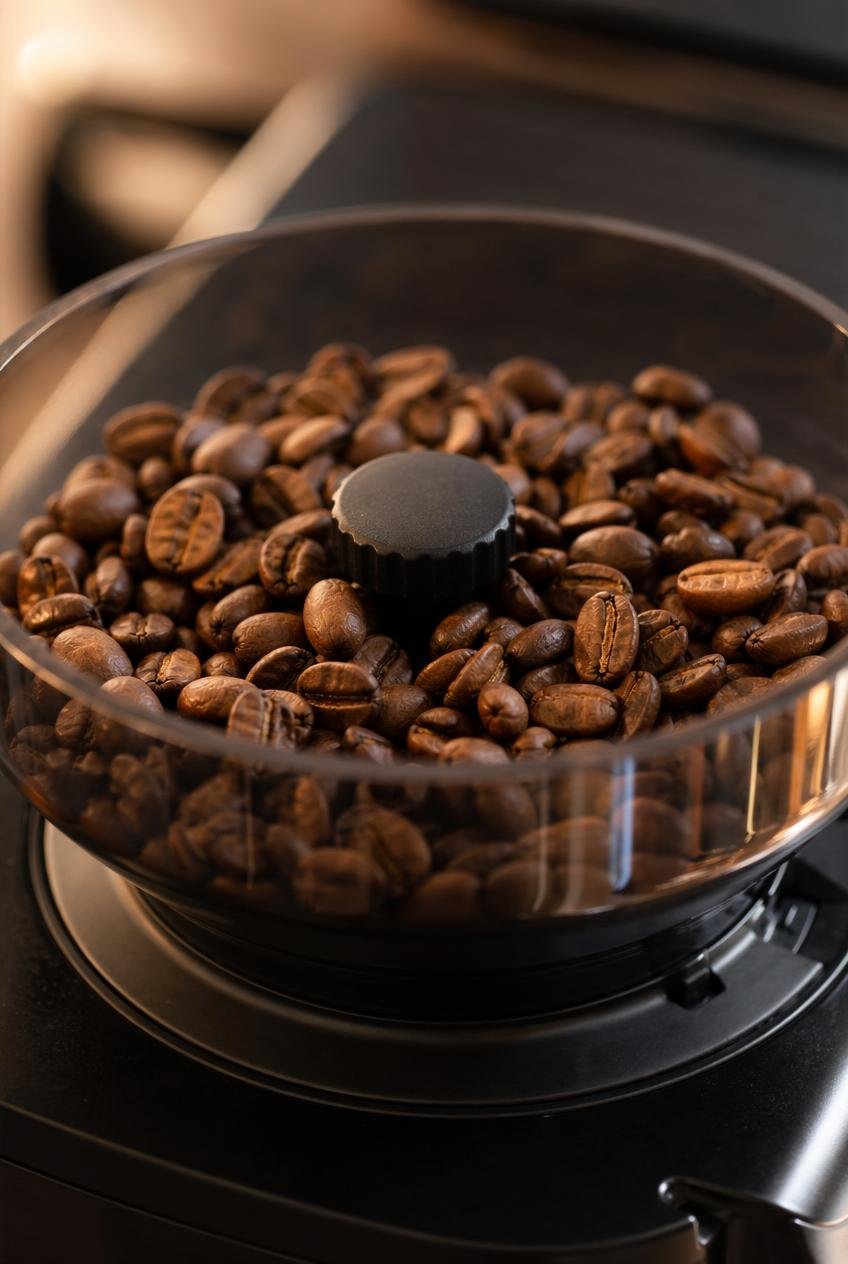
The built-in grinder only helps if the beans are worth grinding. Look for whole beans with a roast date when possible, and avoid letting beans sit in the hopper for weeks. Oxygen and light dull aroma, and old beans produce flat coffee no matter how convenient the machine is.
Adjust the Grind Slowly
For espresso machines, grind size changes can transform the cup. Too coarse, and the shot runs fast, tasting thin and sour. Too fine, and the shot chokes or tastes harsh. Make one change at a time, then taste before moving again.
Do Not Ignore Water
Coffee is mostly water, and your machine feels that every day. Hard water can create scale inside the machine. Flat-tasting water can make coffee taste dull. Use filtered water that still has some mineral content, and follow the descaling schedule for your machine.
Keep the Grinder Path Clean
Coffee oils and fines build up in grinder paths. Over time, that residue can turn stale and muddy the flavor. A clean grinder path gives you better aroma and more consistent brewing. This matters especially for grind-and-brew drip machines where the grinder chute feeds directly into the brew basket.
Use Medium or Medium-Dark Roasts First
Very light roasts can be beautiful, but they are less forgiving in automatic machines. Start with medium or medium-dark beans that bring chocolate, caramel, nut, and brown sugar notes. Once you know how your machine behaves, then experiment with brighter coffees.
Frequently Asked Questions
Is a coffee maker with a grinder built in worth it?
Yes, if convenience helps you use fresh whole beans more often. Freshly ground coffee usually tastes more aromatic and lively than pre-ground coffee. The tradeoff is that built-in grinders are harder to upgrade and require regular cleaning.
Which is better: a built-in grinder or a separate grinder?
A good separate grinder usually gives you more control and better long-term flexibility. A built-in grinder gives you convenience and saves counter space. For serious espresso dialing, separate grinders win. For everyday ease, built-in grinders make sense.
Can a grind-and-brew coffee maker make espresso?
No. A drip-style grind-and-brew coffee maker can make fresh-ground brewed coffee, but it does not use espresso pressure and will not create true crema. If you want espresso, choose a semi-automatic or fully automatic espresso machine.
What kind of beans should I use in a coffee maker with grinder?
Start with fresh medium or medium-dark whole beans. For espresso machines, look for chocolate, caramel, nut, or dried fruit notes. For drip coffee, choose a bean with balance and sweetness rather than something roasted so dark that every cup tastes smoky.
Do built-in grinders need cleaning?
Yes. Coffee oils and fine particles build up over time. Cleaning keeps the grinder from clogging and helps prevent stale flavors from carrying into fresh brews. Follow the machine’s instructions, especially if it has a grinder chute, removable brew group, or milk system.
Final Verdict
If I had to choose one machine for someone who wants to grow as a home barista, I would start with the Breville Barista Express. It gives you enough control to learn espresso without forcing you to buy a separate grinder on day one.
If convenience matters more than craft, the Philips 3200 Series Fully Automatic Espresso Machine and De’Longhi Magnifica Evo are better fits. They are made for people who want fresh-ground espresso drinks without treating every morning like a dialing-in session.
For drip coffee drinkers, the Cuisinart Grind & Brew DGB-900BC is the most natural match. And if you are considering the Ninja Specialty Coffee Maker, just remember the important distinction: it is versatile, but it does not grind your beans.

Marcus Webb spent 15 years as a specialty coffee buyer before leaving the industry to share what he learned with home brewers. Based in the Pacific Northwest, he tests every piece of gear in his own kitchen before recommending it. His rule: if he wouldn’t buy it himself, it doesn’t make the list.